
 Save
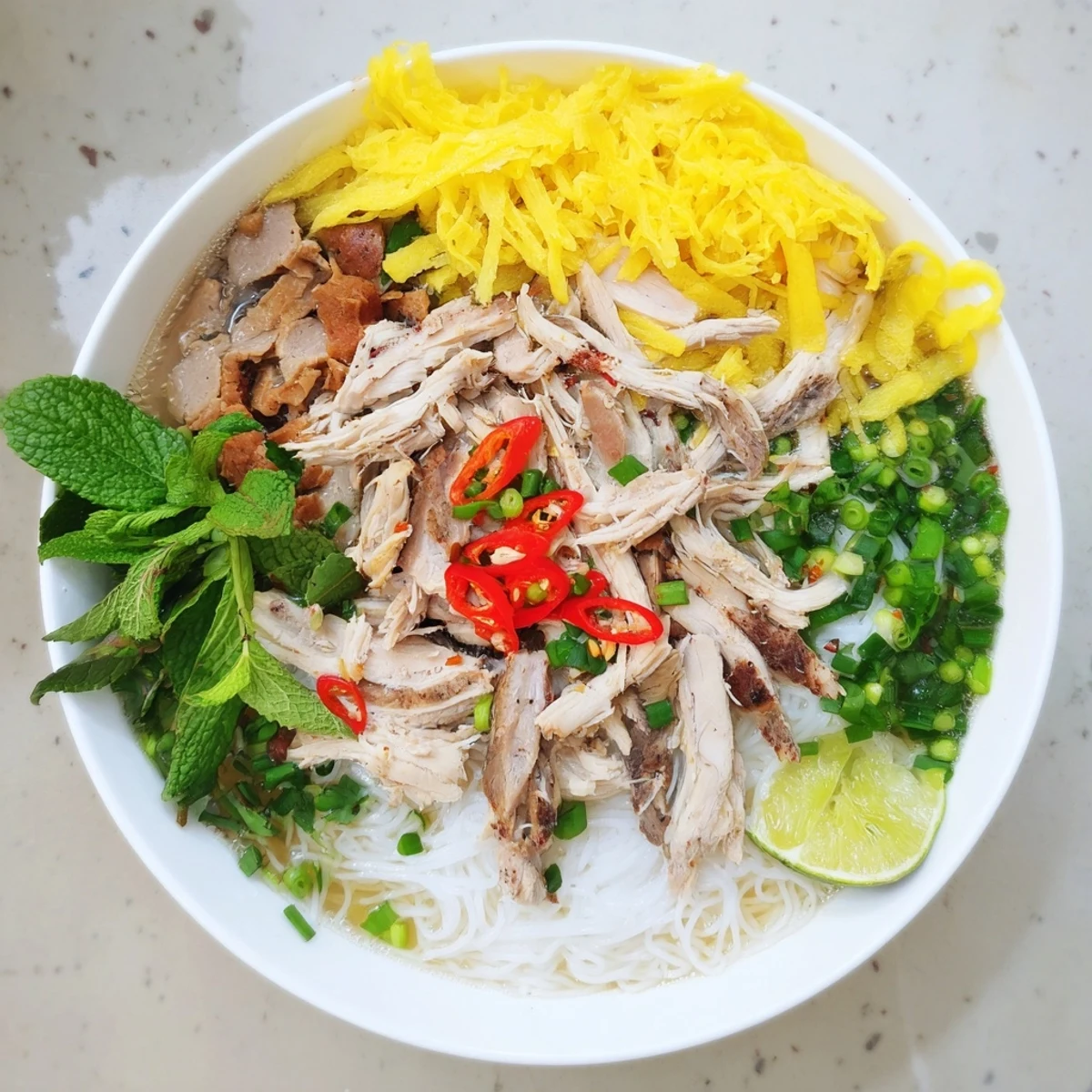
Save Bun Thang represents the pinnacle of Hanoi's refined culinary tradition, featuring an intricate assembly of shredded chicken breast, silky egg crepes cut into delicate strips, Vietnamese pork sausage, and rice vermicelli noodles swimming in a crystal-clear broth. The broth simmers for over an hour with aromatics, achieving depth while maintaining remarkable clarity. Each bowl gets topped with fresh herbs including scallions, cilantro, Vietnamese coriander, and mint, adding layers of fragrance that complement the savory elements. The preparation requires patience and knife skills, as ingredients are uniformly sliced into thin strips for elegant presentation. Optional shrimp paste on the side provides an authentic Hanoi dining experience, while lime wedges offer bright acidity to balance the rich, savory broth.
Last Sunday, my Vietnamese friend invited me over to learn the art of Bun Thang from her grandmother. The kitchen smelled like star anise and slow simmered love. Grandma kept saying patience is the secret ingredient while she shredded chicken into impossibly thin strips. Now I understand why this soup is considered Hanoi's most elegant home cooking.
When I first attempted this alone, I rushed the egg crepe and ended up with scrambled bits instead of those beautiful thin ribbons. My friend laughed and showed me how the lowest heat setting creates the perfect translucent sheet. Now I treat that step like a meditation, watching bubbles form and disappear.
Ingredients
- Whole chicken (about 3 lbs/1.4 kg): The foundation of both broth and protein choose one with good fat content for richer flavor
- Medium yellow onion, peeled: Adds natural sweetness to the clear broth leave it whole for easy removal
- 2 inch piece of ginger, sliced and smashed: Smashing releases more aromatic oils than slicing alone
- 6 cups (1.5 L) water: Start with less you can always add more but concentrating flavor later is impossible
- 1 tsp salt and 1 tbsp fish sauce: Build seasoning gradually tasting as you go since brands vary in strength
- 1 tsp rock sugar: Traditional touch that balances the savory notes without making soup sweet
- Vietnamese pork sausage (gio lua): This smooth steamed sausage adds essential texture contrast
- 3 large eggs: For the signature egg ribbons that dance in the hot broth
- Dried rice vermicelli noodles (bun): Soak until pliable but not mushy they should retain a pleasant chew
- Fresh herb assortment: Cilantro, Vietnamese coriander, and mint are non negotiable for authentic character
Instructions
- Build the foundation:
- Place chicken, onion, and ginger in your largest pot. Add cold water and bring everything to a gentle boil together.
- Skim for clarity:
- As foam rises, remove it patiently with a ladle. This extra effort creates that restaurant quality clear broth.
- Time the chicken:
- After 30 minutes of simmering, lift the chicken out. It should feel firm but yielding. Let it cool while the broth continues developing.
- Deepen the broth:
- Cook the liquid another 45 minutes with aromatics. Season with salt, fish sauce, and rock sugar. Strain through cheesecloth for absolute clarity.
- Shred with intention:
- Pull chicken breast into thin strips following the grain. The more uniform your pieces, the more elegant the presentation.
- Craft the egg ribbons:
- Whisk eggs with a pinch of salt. Pour a thin layer into a barely warm pan. Let it set undisturbed, then flip briefly. Roll and slice into fine ribbons.
- Prep the remaining elements:
- Cook noodles according to package directions. Slice pork sausage into matchsticks. Chop herbs and slice chili just before serving.
- Compose each bowl:
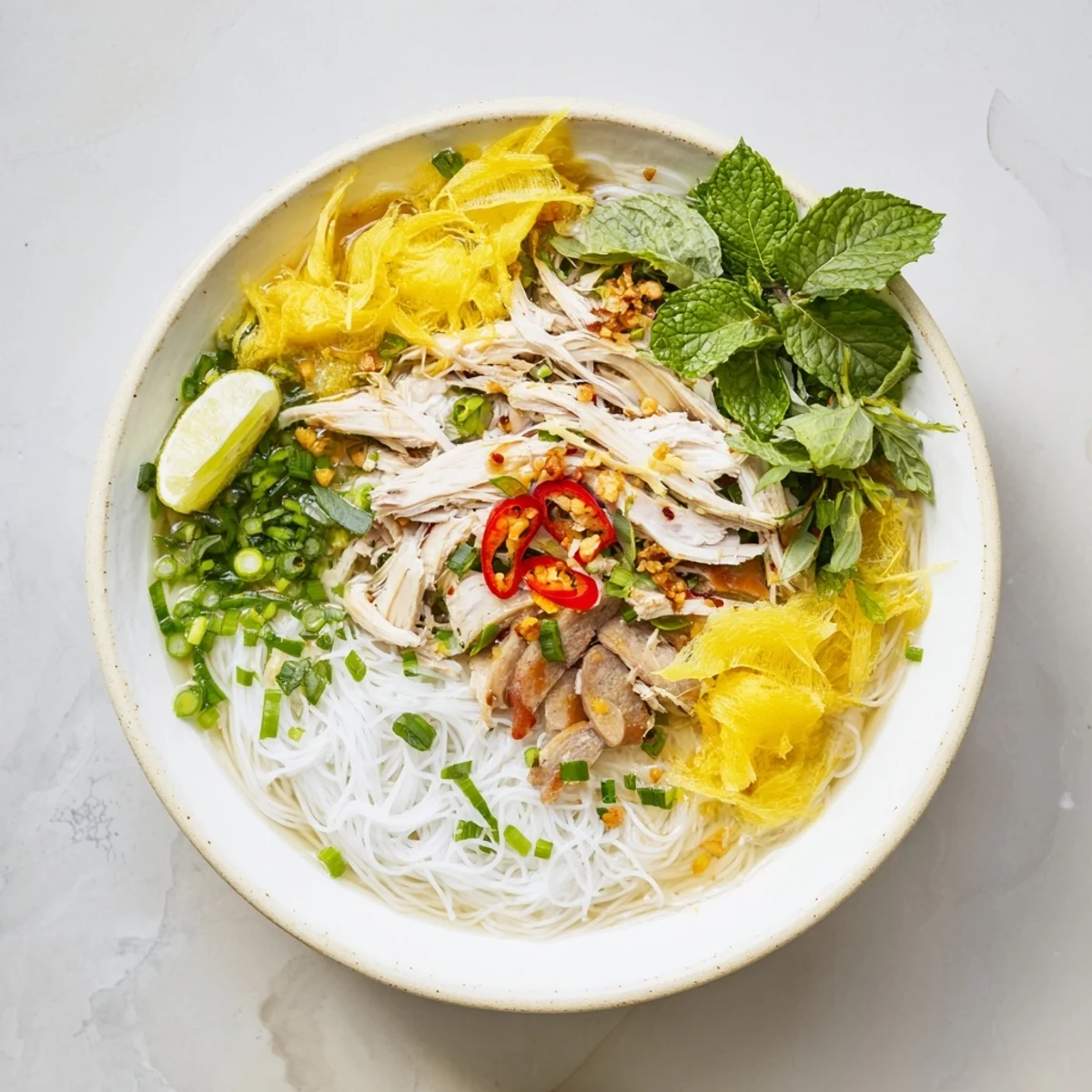
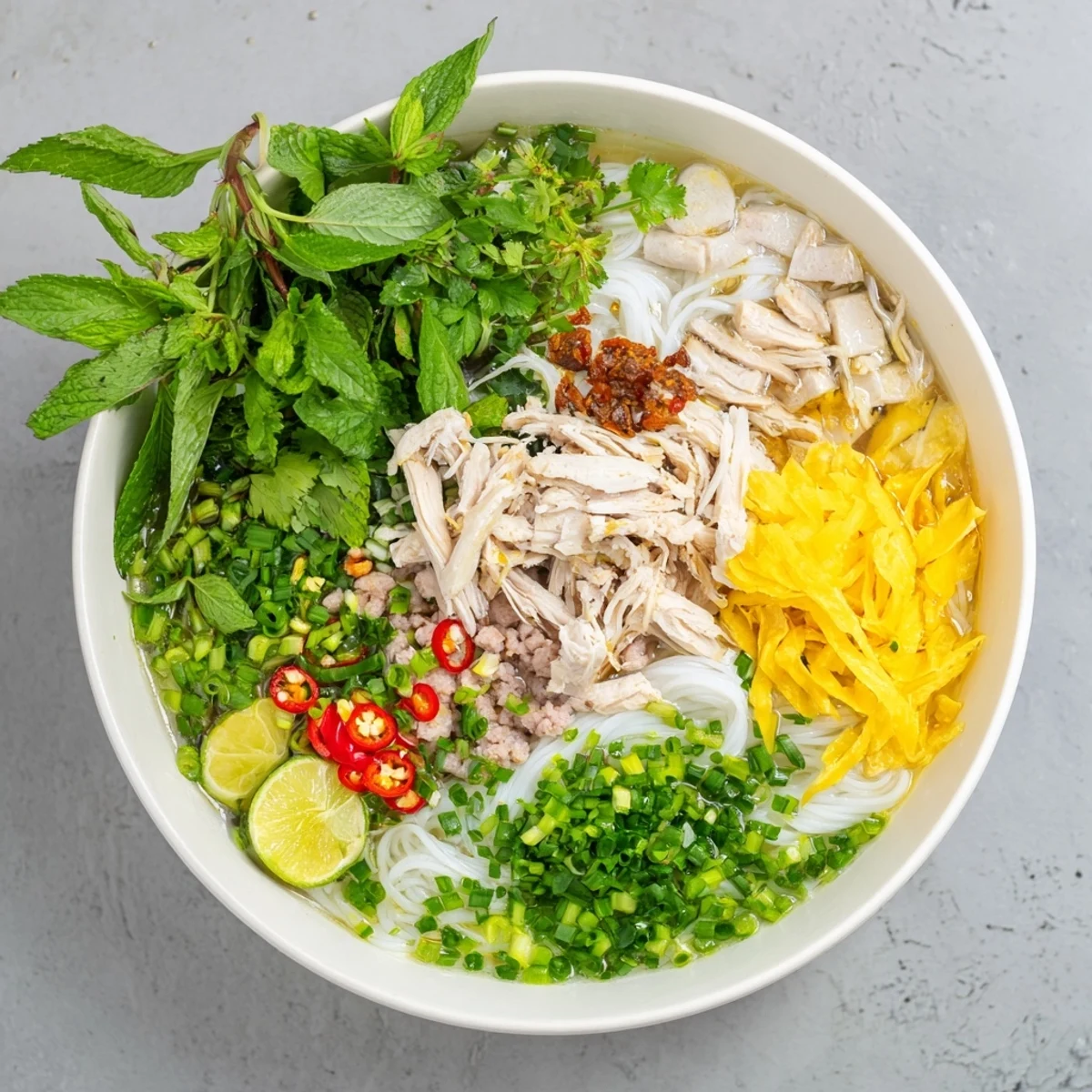
- Arrange noodles in shallow bowls. Create sections of chicken, egg ribbons, and sausage. Scatter herbs on top like confetti.
- The grand finale:
- Ladle piping hot broth directly over the arranged toppings. Watch everything steam and release aromas. Serve immediately with lime and extra fish sauce.
 Save
Save My daughter now requests this for her birthday dinner every year. She says it tastes like a hug in a bowl, and honestly, she is not wrong.
Mastering the Clear Broth
The secret to restaurant quality clarity lies in the skimming process and final straining. I use a fine mesh sieve lined with cheesecloth to catch every last particle of cloudiness. Do not rush this step the visual appeal of Bun Thang depends on that crystalline broth.
The Art of Arrangement
Traditional Hanoi style places each topping in its own little section across the noodles. It looks stunning and allows eaters to choose their perfect bite composition. I use chopsticks to position ingredients carefully before pouring any broth.
Making It Your Own
While authentic preparation requires patience, do not stress about perfection. The soul of this dish is comfort and nourishment. Some days I use leftover roast chicken. Other days I skip the pork sausage entirely.
- Prep all toppings before starting the broth for the most relaxed cooking experience
- Keep broth hot but not boiling while you assemble individual bowls
- Put everything except broth on the table and let guests build their own bowls family style
 Save
Save There is something profoundly healing about a bowl of soup this carefully composed. I hope it brings your table the same warmth it brings to mine.
Recipe FAQs
- → What makes Bun Thang different from other Vietnamese noodle soups?
-
Bun Thang stands out for its delicate preparation and clear broth, unlike the richer, spicier profiles of Pho or Bun Bo Hue. Every topping is uniformly cut into thin strips, creating an elegant presentation that reflects Hanoi's refined culinary philosophy.
- → Can I make the broth ahead of time?
-
Absolutely. The broth actually develops more depth when made a day ahead. Store it in the refrigerator overnight, then skim off any solidified fat before reheating. This makes the assembly process much more manageable.
- → What can I substitute for Vietnamese pork sausage?
-
If gio lua isn't available, thinly sliced lean ham or roast pork works well. For a vegetarian option, use fried tofu strips or shiitake mushrooms sliced thinly. The key is maintaining the uniform strip shape.
- → Why is the broth strained?
-
Straining ensures the crystal-clear appearance that's characteristic of Bun Thang. The broth should be pristine and golden, allowing all the colorful toppings to shine visually in the bowl.
- → How do I achieve perfectly thin egg crepe strips?
-
Pour the thinnest possible layer of egg into a nonstick skillet over medium-low heat. The crepe should be just set, not browned. Roll it tightly before slicing with a sharp knife to achieve uniform, delicate strips.
- → Is shrimp paste essential for serving?
-
Shrimp paste (mam tom) is traditional but optional. It adds intense umami and funk characteristic of Northern Vietnamese cuisine. If unavailable or too strong for your taste, extra fish sauce or a squeeze of lime works beautifully.