
 Save
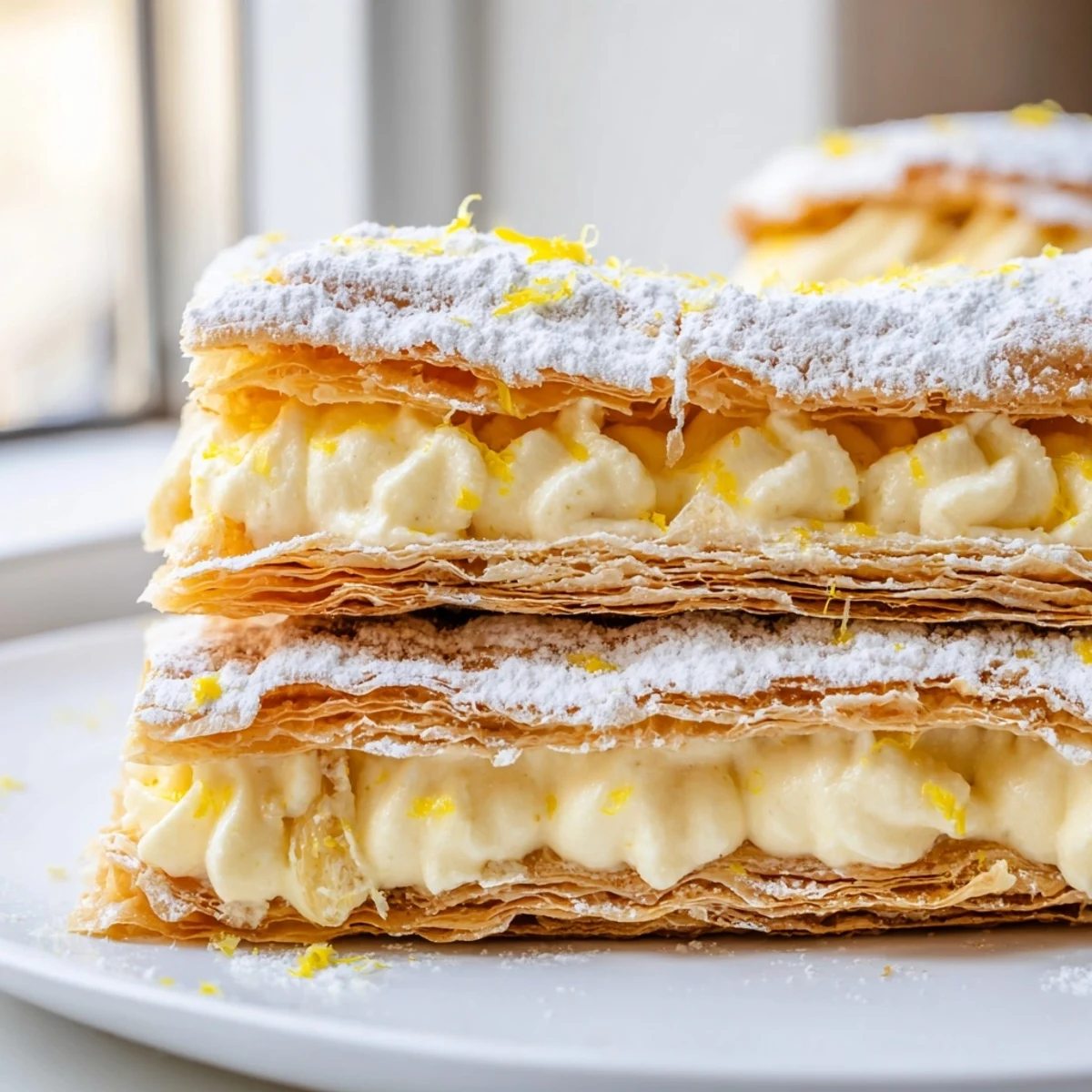
Save This Lemon Ricotta Puff Pastry Mille Feuille brings together golden, shatteringly crisp puff pastry sheets with a silky lemon ricotta cream filling.
The ricotta is whisked smooth with fresh lemon zest and juice, then gently folded with whipped cream for an impossibly light texture.
Assembled in neat stacked layers and finished with a snowy dusting of powdered sugar, each bite delivers a satisfying contrast of flaky crunch and cool, citrusy cream.
Ready in under an hour, it's an impressive dessert that feels special enough for a dinner party yet simple enough for a weekend treat.
The sound of puff pastry crackling as it bakes is one of those small kitchen pleasures that makes me stop whatever I am doing and just listen. I stumbled onto this lemon ricotta mille feuille during a humid July afternoon when I needed something impressive but refused to turn my kitchen into a sauna. The contrast of shattering crisp pastry against that cool, tangy cream felt like a dessert that had no business being this easy. It has since become my answer to every dinner party where I want to look like I tried harder than I actually did.
I brought these to a friends rooftop gathering last September, carefully stacking them on a white plate that wobbled dangerously on the bike ride over. Three people asked for the recipe before the sun went down, and one friend honestly believed I had made the pastry from scratch.
Ingredients
- Puff pastry (1 sheet, approx 250 g): Store bought is perfectly acceptable here and saves you hours of laminating dough by hand.
- Granulated sugar (1 tbsp): A light sprinkle on the pastry before baking creates a delicate caramelized crust.
- Ricotta cheese (250 g): Full fat ricotta gives the cream its lush body, so avoid the low fat versions.
- Heavy cream (100 ml): Whipped to stiff peaks and folded in, it transforms the ricotta into something cloud like.
- 1 lemon (zest and juice): Use a fragrant, unwaxed lemon if possible because the zest carries most of the aroma.
- Powdered sugar (60 g plus extra for dusting): Dissolves seamlessly into the ricotta where granulated sugar would leave gritty pockets.
- Vanilla extract (1 tsp): Rounds out the sharpness of the lemon and adds warmth to the cream.
Instructions
- Preheat and prepare:
- Set your oven to 200 degrees Celsius (400 degrees Fahrenheit) and line a baking tray with parchment paper so the pastry never sticks.
- Cut and weight the pastry:
- Roll the puff pastry out on a lightly floured surface and cut it into twelve even rectangles, then lay them on the tray, sprinkle with sugar, and cover with another sheet of parchment topped with a second baking tray to keep them from puffing unevenly.
- Bake until golden:
- Bake for 15 to 20 minutes, watching for that deep golden color, then transfer to a wire rack and let them cool completely because warm pastry will melt your cream.
- Make the lemon ricotta cream:
- Whisk the ricotta in a bowl until perfectly smooth, then stir in powdered sugar, lemon zest, lemon juice, and vanilla until everything is fully blended.
- Whip and fold the cream:
- In a separate bowl, whip the heavy cream to stiff peaks, then gently fold it into the ricotta mixture with a spatula, careful not to knock out the air you just worked in.
- Build the mille feuilles:
- Spread or pipe a generous layer of the lemon ricotta cream onto six of the pastry rectangles, then crown each one with a second rectangle, pressing down just gently enough to feel it settle.
- Finish and serve:
- Dust the tops generously with powdered sugar and scatter over extra lemon zest if you like, then serve immediately while the pastry still shatters between your teeth.
 Save
Save There is something quietly theatrical about placing a mille feuille in front of someone and watching the moment they press down with a fork and hear that first crack.
Choosing the Right Puff Pastry
Not all store bought puff pastry is created equal, and I learned this after buying a budget brand that barely rose in the oven. Look for brands made with real butter rather than vegetable oils, because the flavor difference is striking. If your grocery store carries an all butter French brand, grab it without hesitation.
Serving and Pairing Ideas
A cold glass of Moscato d Asti beside one of these is genuinely one of my favorite ways to end a meal. You could also add a handful of fresh raspberries or blueberries between the layers for color and a burst of tartness that plays beautifully against the lemon.
Storing and Timing
These mille feuilles are at their absolute best within an hour of assembly, before the cream has time to soften the pastry into sadness. If you need to plan ahead, bake the pastry rectangles and make the cream separately, then keep both in the fridge and assemble at the last minute.
- Pastry rectangles stay crisp in an airtight container at room temperature for up to two days.
- The lemon ricotta cream holds well in the fridge for three days covered tightly.
- Never assemble more than an hour before serving or you will lose that essential crunch.
 Save
Save Every time I make these, I am reminded that the best desserts are not the most complicated ones, but the ones that make people close their eyes when they take the first bite.
Recipe FAQs
- → Can I make the puff pastry from scratch?
-
Absolutely. Homemade puff pastry will yield the flakiest results, though it requires time and patience for the lamination process. Store-bought puff pastry works beautifully and keeps preparation time under an hour.
- → How do I keep the puff pastry layers crisp?
-
The trick is to sandwich the pastry with another baking tray on top during baking—this prevents excessive puffing and ensures even, flat layers. Also, let the pastry cool completely before adding the cream, and assemble just before serving.
- → Can I prepare the lemon ricotta cream ahead of time?
-
Yes, you can make the cream up to 24 hours in advance. Store it covered in the refrigerator. Give it a gentle stir before piping or spreading onto the pastry layers.
- → What can I substitute for ricotta cheese?
-
Mascarpone makes a richer, creamier alternative, while drained Greek yogurt offers a lighter, tangier option. If using mascarpone, you may want slightly less heavy cream to keep the filling from becoming too dense.
- → How should I store leftovers?
-
Once assembled, the mille feuille is best eaten immediately as the cream will soften the pastry over time. If needed, store leftovers in the refrigerator for up to 4 hours. The baked pastry sheets and cream can be stored separately for up to 2 days.
- → Why place a second baking tray on top of the pastry?
-
Weighting the puff pastry with a second tray prevents it from puffing unevenly and keeps the layers flat and uniform. This technique ensures clean, stackable rectangles that hold their shape during assembly.