
 Save
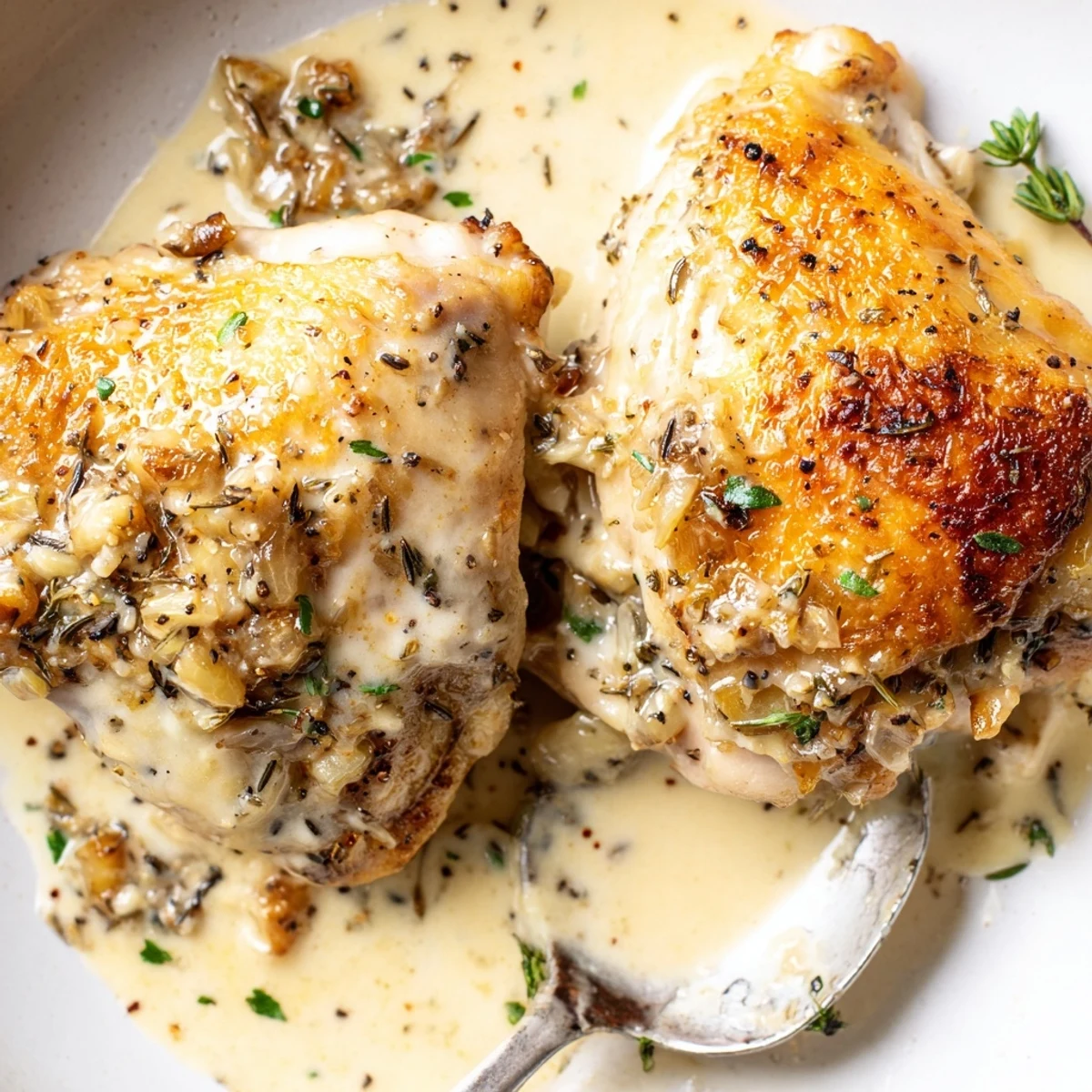
Save Start by patting bone-in, skin-on thighs dry and seasoning with salt and pepper. Sear in olive oil and butter until golden. Remove, then soften onion and garlic in the pan. Deglaze with chicken broth, stir in heavy cream and herbs (thyme, rosemary, oregano) and return the chicken. Simmer, covered, until cooked through and sauce thickens. Serve with mashed potatoes or crusty bread.
The sound of chicken skin hitting a hot skillet is, in my humble opinion, one of the top five noises in any kitchen. It was a rainy Tuesday and I had a pack of thighs that needed using, so I threw together whatever herbs and cream I had hanging around. The result was so absurdly good that my partner looked up from their plate and said nothing for a full minute, which is the highest compliment in our house. That skillet of golden chicken swimming in garlicky cream has since become our unofficial cold weather greeting.
I once made this for my neighbor who had just had surgery, and she returned the clean baking dish with a handwritten note asking for the recipe. There is something about a creamy herb sauce that makes people feel genuinely cared for, like you spent all day even though it barely took half an hour.
Ingredients
- 4 bone in, skin on chicken thighs: The skin renders fat into the pan and keeps the meat incredibly juicy underneath.
- 5 cloves garlic, minced: Do not skimp on the garlic here, it melts into the cream and becomes mellow and sweet.
- 1 small onion, finely diced: Onion builds a sweetness that balances the heavy richness of the cream.
- 1 cup heavy cream: This is the backbone of the sauce, and nothing else will give you the same velvety texture.
- 2 tbsp unsalted butter: Combined with olive oil, it gives the chicken a nutty golden sear.
- 1/2 cup chicken broth: Broth deglazes the pan and loosens all those caramelized bits into the sauce.
- 1 tsp dried thyme: Thyme has an earthy warmth that pairs naturally with cream and poultry.
- 1 tsp dried rosemary: A little rosemary goes a long way toward making the dish taste like it came from a countryside kitchen.
- 1/2 tsp dried oregano: Oregano adds a subtle floral note that rounds out the herb blend without overpowering it.
- 1 tbsp fresh parsley, chopped, plus extra for garnish: Fresh parsley at the end lifts everything with brightness and color.
- Salt and freshly ground black pepper, to taste: Season boldly at every stage, not just at the end.
- 1 tbsp olive oil: Olive oil raises the smoke point of the butter so you get a clean sear.
Instructions
- Dry and season the chicken:
- Pat the thighs completely dry with paper towels and sprinkle both sides generously with salt and pepper. Dry skin is the only way to get that shatteringly crisp crust.
- Get the pan hot:
- Set a large skillet over medium high heat and add the olive oil and butter, letting them melt together until the butter stops foaming. You want the fat shimmering but not smoking.
- Sear until golden:
- Lay the chicken thighs skin side down and let them cook undisturbed for 5 to 6 minutes until the skin is deeply golden, then flip and sear the other side. Remove them to a plate and try not to snack on the crispy skin.
- Build the aromatics:
- In the same skillet with all those rendered juices, cook the diced onion for 2 to 3 minutes until softened, then stir in the minced garlic for about 1 minute until you can smell it from across the room.
- Deglaze the pan:
- Pour in the chicken broth and use a wooden spoon to scrape up every browned bit stuck to the bottom. Those bits are concentrated flavor and they will dissolve right into your sauce.
- Make the cream sauce:
- Lower the heat to medium low and pour in the heavy cream along with the thyme, rosemary, oregano, and chopped parsley. Stir everything together until it looks like a fragrant herb flecked bath.
- Simmer the chicken:
- Nestle the chicken thighs back into the skillet skin side up, spoon a little sauce over each one, then cover with a lid. Let it simmer gently for 15 minutes until the chicken is cooked through and the sauce coats the back of a spoon.
- Finish and serve:
- Taste the sauce and add more salt or pepper if it needs it, then scatter extra parsley over the top. Serve straight from the skillet with something starchy to catch every drop.
 Save
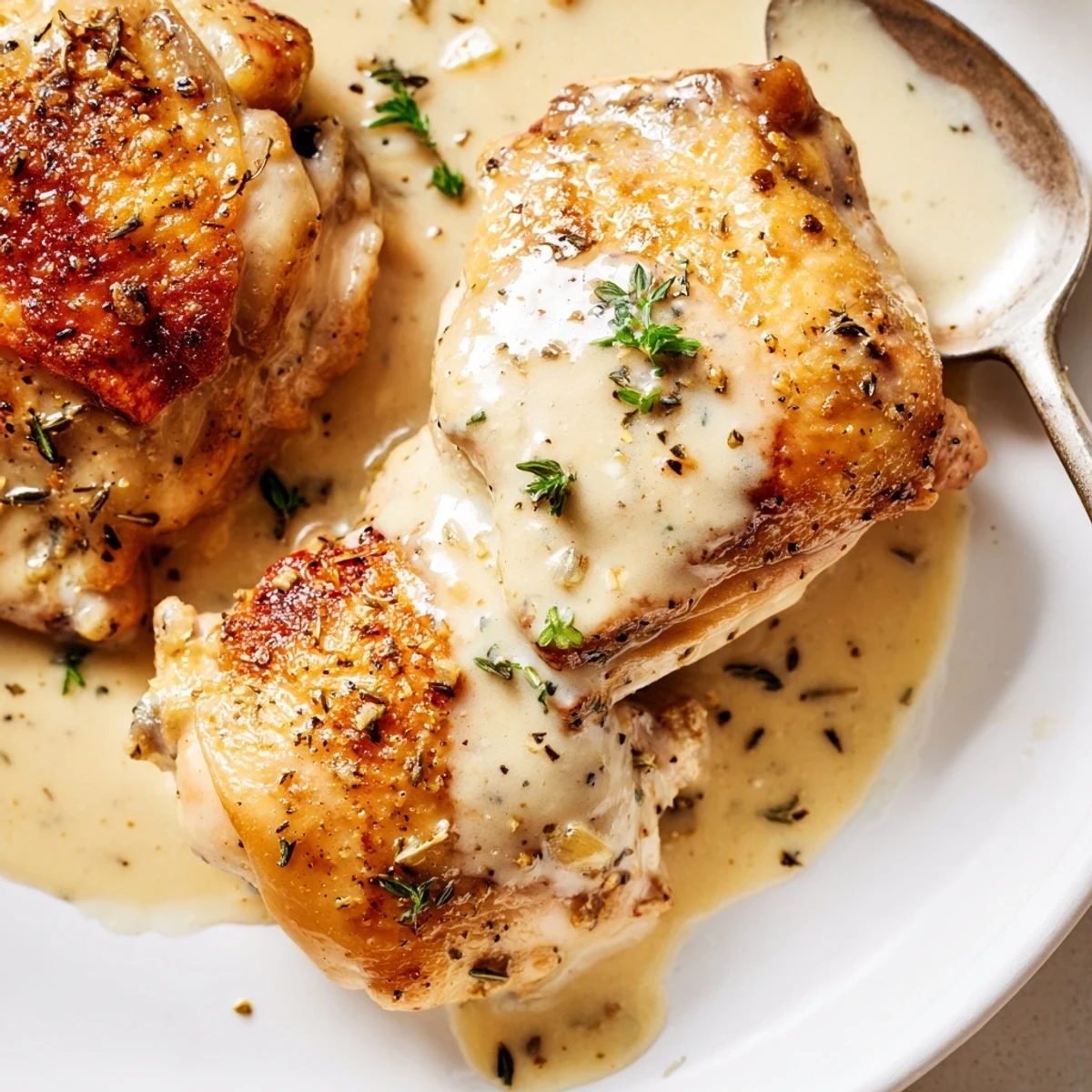
Save There was a night when the power went out halfway through cooking this and I finished it on the gas stovetop by candlelight, ladling sauce over rice at the kitchen counter while the rain hammered the windows. Somehow everything tasted better in the dark.
What to Serve Alongside
Mashed potatoes are the obvious choice and they are never wrong here, but I have also spooned this over buttered egg noodles and once over a pile of cheesy polenta that practically disappeared. Crusty bread is essential regardless, because someone at the table will want to mop the skillet clean.
Swaps and Adjustments
Boneless skinless thighs work beautifully if that is what you have, though you will lose some of that crispy skin magic and should reduce the simmer time by about 5 minutes. A splash of dry white wine added alongside the broth adds a lovely tangy depth, and I have stirred in a handful of spinach at the very end when I felt like pretending we were being virtuous.
Storing and Reheating
Leftovers keep well in the fridge for up to 3 days, though the sauce will thicken considerably as it chills. Reheat gently in a skillet over low heat with a splash of broth or water to loosen it back up.
- Avoid microwaving at full power, since the cream can separate and the chicken skin loses its texture.
- Freeze the sauce on its own if you want, but the chicken skin will not crisp again after thawing.
- Always check that your chicken broth is labeled gluten free if that matters to you.
 Save
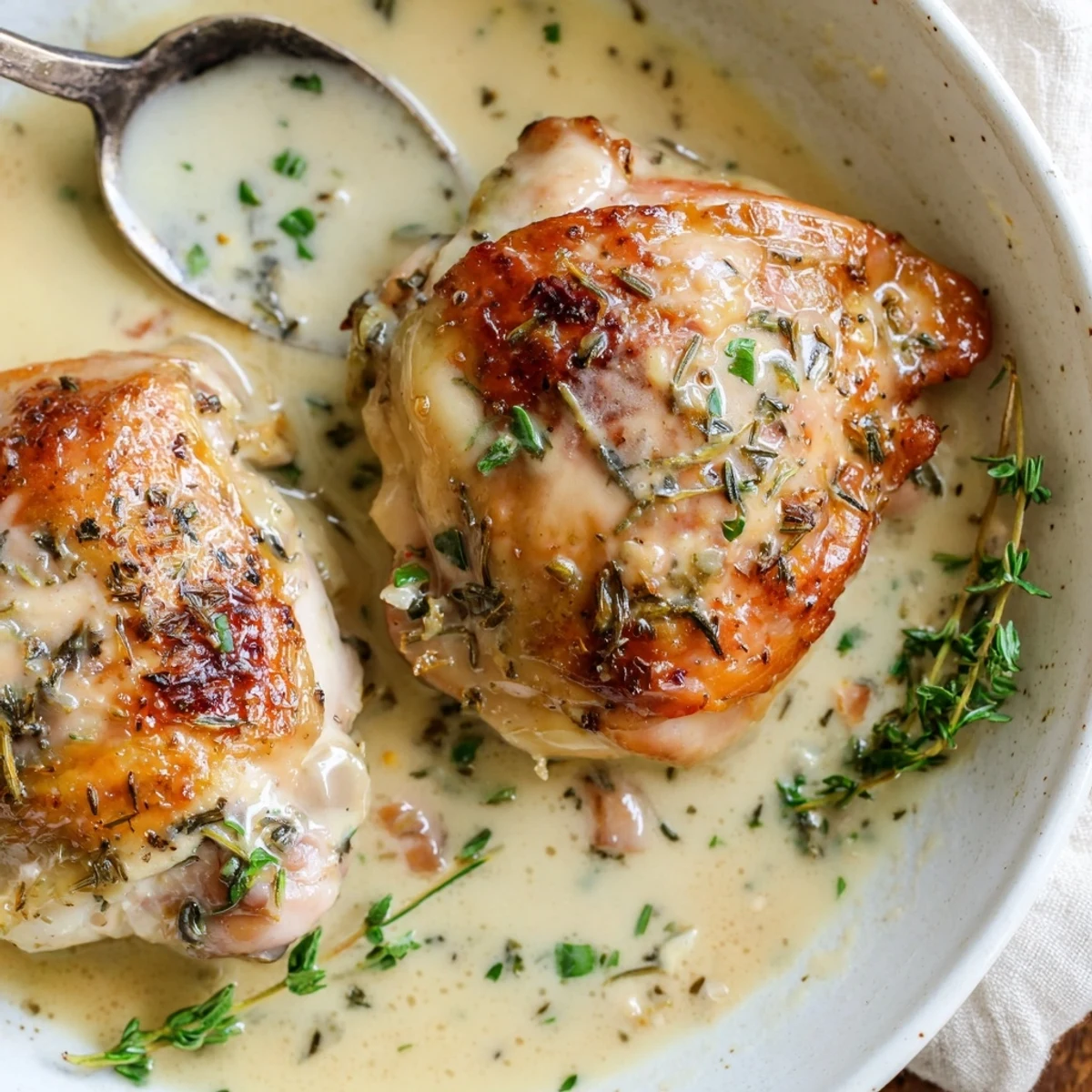
Save This is the kind of dish that turns a random weeknight into something worth remembering, one creamy herb soaked bite at a time. Make it once and it will quietly become part of your regular rotation.
Recipe FAQs
- → How do I get the skin extra crispy before simmering?
-
Pat the skin very dry and sear skin-side down in a hot skillet without moving until deep golden. Remove the thighs to finish the sauce, then return them skin-side up so contact with the sauce is limited and the skin stays crispier.
- → Can I use boneless, skinless thighs instead?
-
Yes. Reduce sear time slightly and shorten the covered simmer to avoid overcooking—check for an internal temperature of 165°F. Boneless pieces cook faster and soak up the sauce differently.
- → How can I thicken the cream sauce if it's too thin?
-
Simmer uncovered a few extra minutes to reduce. For faster thickening, whisk a small cornstarch slurry (1 tsp cornstarch + 1 tbsp cold water) into the simmering sauce until glossy. For richer texture, stir in a pat of cold butter off heat.
- → Are there good swaps for heavy cream?
-
Use half-and-half for a lighter finish, or mix milk with a teaspoon of cornstarch to mimic thickness. If using Greek yogurt, temper it off heat to prevent splitting and stir in just before serving.
- → Which herbs work best in this dish?
-
Thyme and rosemary add savory depth, oregano gives a subtle earthiness, and fresh parsley brightens the finish. Use dried herbs at about one-third the amount of fresh, adding them when the cream goes in.
- → Can I make this ahead and reheat without losing texture?
-
Yes. Cool quickly and store in the fridge up to 48 hours. Reheat gently over low heat with a splash of broth to loosen the sauce; avoid boiling to prevent the cream from separating. Finish with fresh parsley before serving.