
 Save
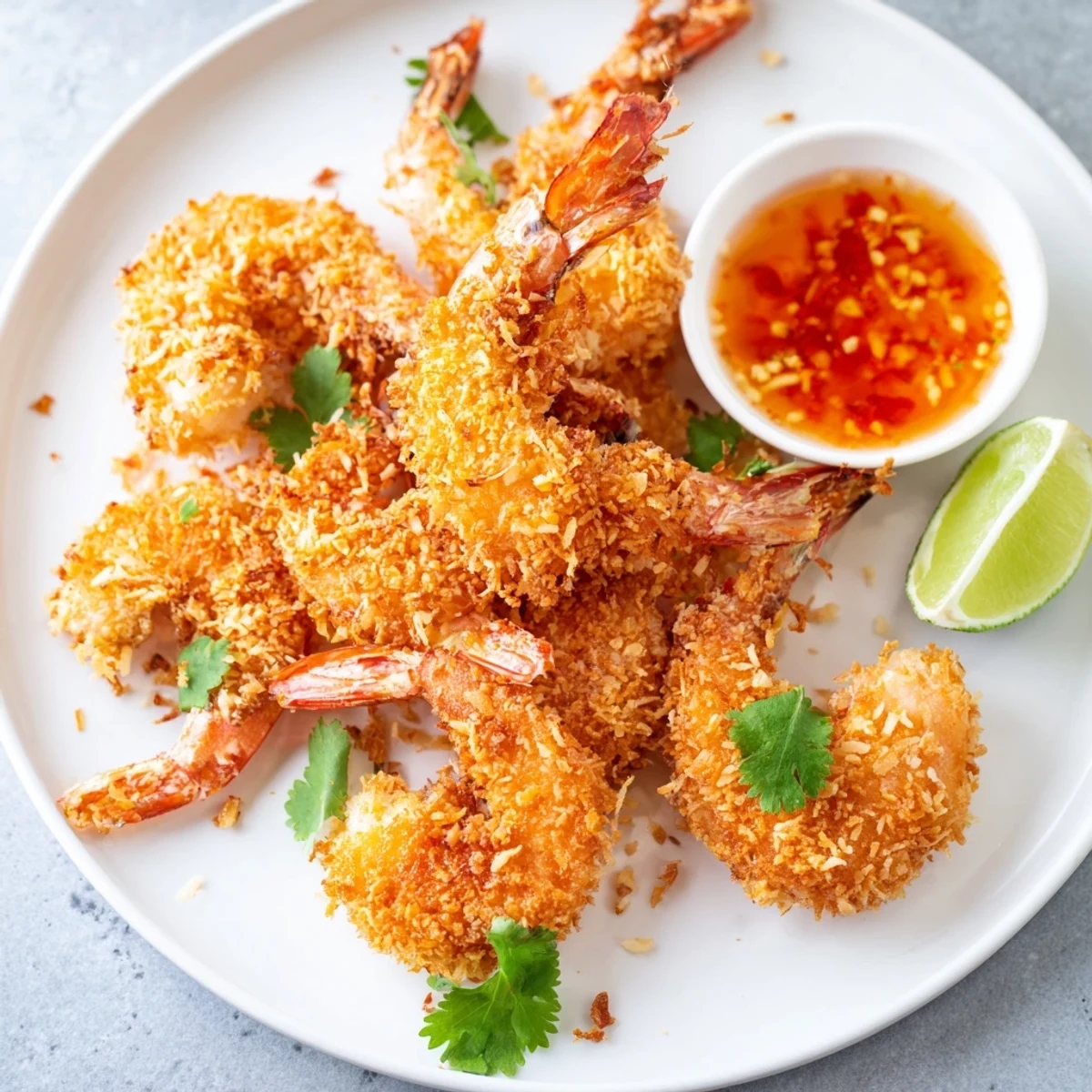
Save Experience a perfect balance of crunchy and savory with these golden shrimp, coated in shredded coconut and crispy panko breadcrumbs. Fried to achieve a crisp exterior, they’re paired with a tangy sweet chili sauce enhanced by fresh lime and optional cilantro for vibrant flavor. This quick-to-make dish suits easy entertaining or a flavorful starter, accommodating pescatarian diets and blending Asian and Caribbean influences. For a lighter option, try baking instead of frying.
Last summer, my cousin showed up with a bag of jumbo shrimp and challenged me to make something better than our local Thai spot. We spent the afternoon making a mess of the kitchen with coconut flakes flying everywhere and oil splattering the stovetop. The first batch came out dark brown because I couldn't tell if they were done through the thick coating. But once we figured out the timing, nobody could stop eating them long enough to set the table.
I made these for my book club thinking it would be an elegant appetizer, but everyone abandoned their wine glasses and crowded around the serving platter like we were at a tailgate party. Someone actually asked if there was a second batch hiding somewhere. Now theyre requested at every gathering, whether it is fancy or completely casual.
Ingredients
- Large raw shrimp: Tails on make them easier to handle for dipping and they look gorgeous on the platter
- Salt and black pepper: A simple seasoning base that lets the coconut flavor really shine through
- All-purpose flour: Creates that first dry layer that helps the egg mixture cling to the shrimp
- Eggs and milk: Whisked together to create the perfect adhesive for the coconut coating
- Unsweetened shredded coconut: The real star here, sweet coconut that crisps up beautifully in hot oil
- Panko breadcrumbs: These Japanese-style crumbs are lighter and crispier than regular breadcrumbs
- Vegetable oil: You need enough depth to fry properly without overcrowding the pan
- Sweet chili sauce: Store-bought works perfectly, though homemade adds a nice personal touch
- Fresh lime juice: Just enough acid to balance the sweetness and cut through the fried coating
- Fresh cilantro: Optional but it adds such a bright, fresh finish to the dipping sauce
Instructions
- Prep the shrimp:
- Pat them completely dry with paper towels because any moisture will make the coating slide right off during frying, then season both sides generously with salt and pepper.
- Set up your dipping station:
- Arrange three shallow bowls in a line, with flour in the first, the whisked egg and milk mixture in the second, and coconut mixed with panko in the third.
- Coat each shrimp:
- Dredge in flour first and shake off the excess, dip into the egg mixture letting the runoff drip off, then press firmly into the coconut-panko blend to get good coverage.
- Heat your oil:
- Pour oil into a deep skillet until it is about two inches deep and bring it to 180°C over medium-high heat, or until a small piece of coconut sizzles immediately.
- Fry until golden:
- Cook the shrimp in batches so you do not crowd the pan, flipping once after 2 to 3 minutes when the first side is deep golden brown.
- Drain and rest:
- Transfer the finished shrimp to a paper towel-lined plate and let them rest for a minute so the coating sets up properly.
- Make the dipping sauce:
- Whisk together sweet chili sauce with fresh lime juice and chopped cilantro until well combined.
 Save
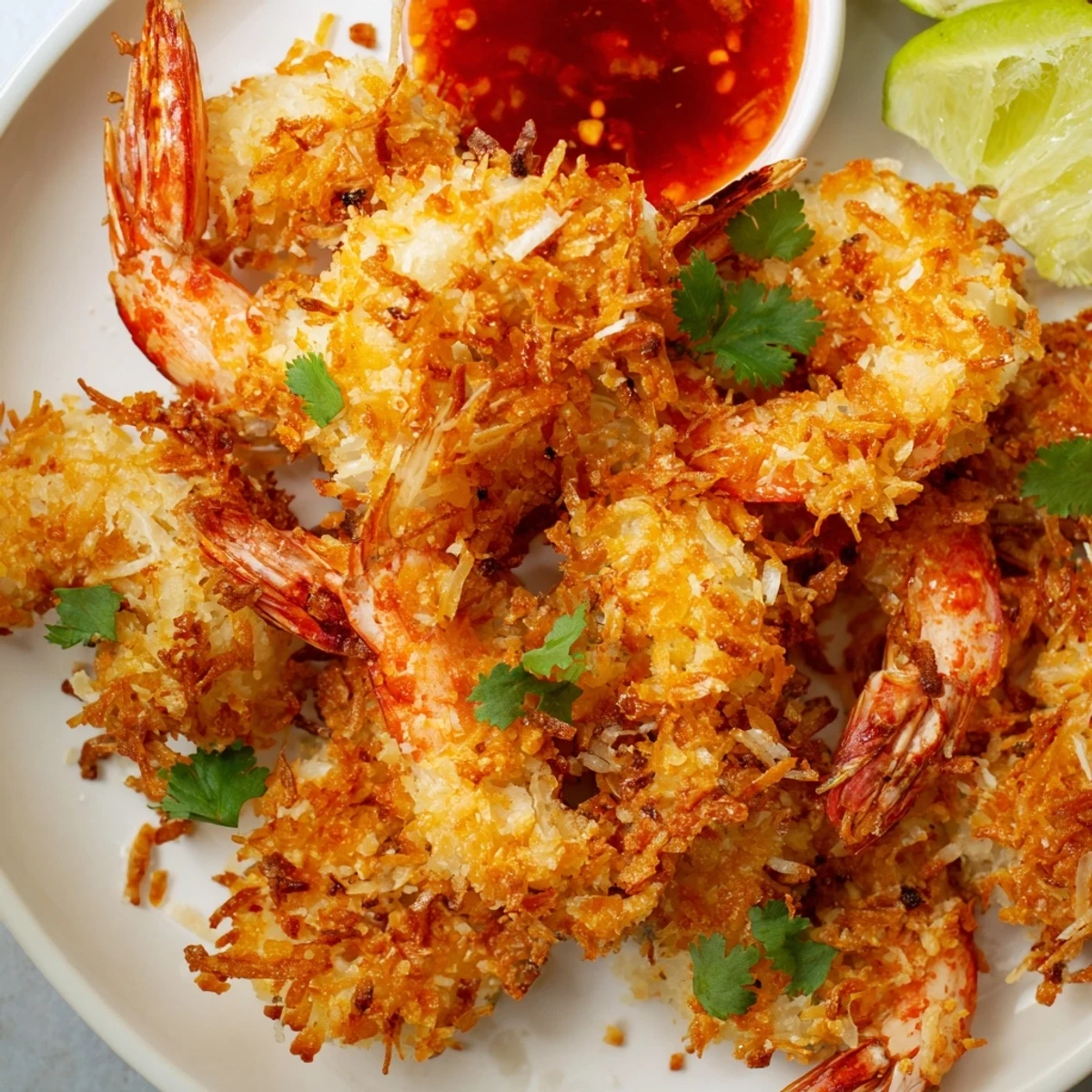
Save My roommate walked in while I was mid-fry batch and the whole apartment smelled like a tropical bakery. She stood there watching me turn each shrimp, completely mesmerized by the golden brown color developing. Now whenever coconut shrimp appears on a menu anywhere, she sends me a photo like we share some inside joke.
The Breading Secret
Pressing the coconut mixture onto the shrimp instead of just dropping it in the bowl is what makes the coating actually stay on during frying. I learned this after ending up with naked shrimp and a pile of burnt coconut at the bottom of my oil pan the first time around. Gentle pressure creates a solid layer that fries up incredibly crisp.
Oil Temperature Matters
Too cold and the shrimp absorb oil, getting greasy instead of crispy. Too hot and the coconut burns before the shrimp is even cooked through. I keep a thermometer clipped to the side of my pan now because guessing cost me one ruined batch. The sweet spot is right around 180°C for perfectly golden, crunch shrimp every time.
Serving Strategy
These shrimp are best the moment they come out of the oil, so plan to serve them immediately while they are still hot and audibly crispy. Everyone tends to crowd around the kitchen anyway, so just put out platters and let people eat as you finish each batch.
- Keep the sauce in a small bowl on the side rather than drizzling it on
- Lemon wedges make a nice addition if you want extra acid
- A light white wine balances the richness perfectly
 Save
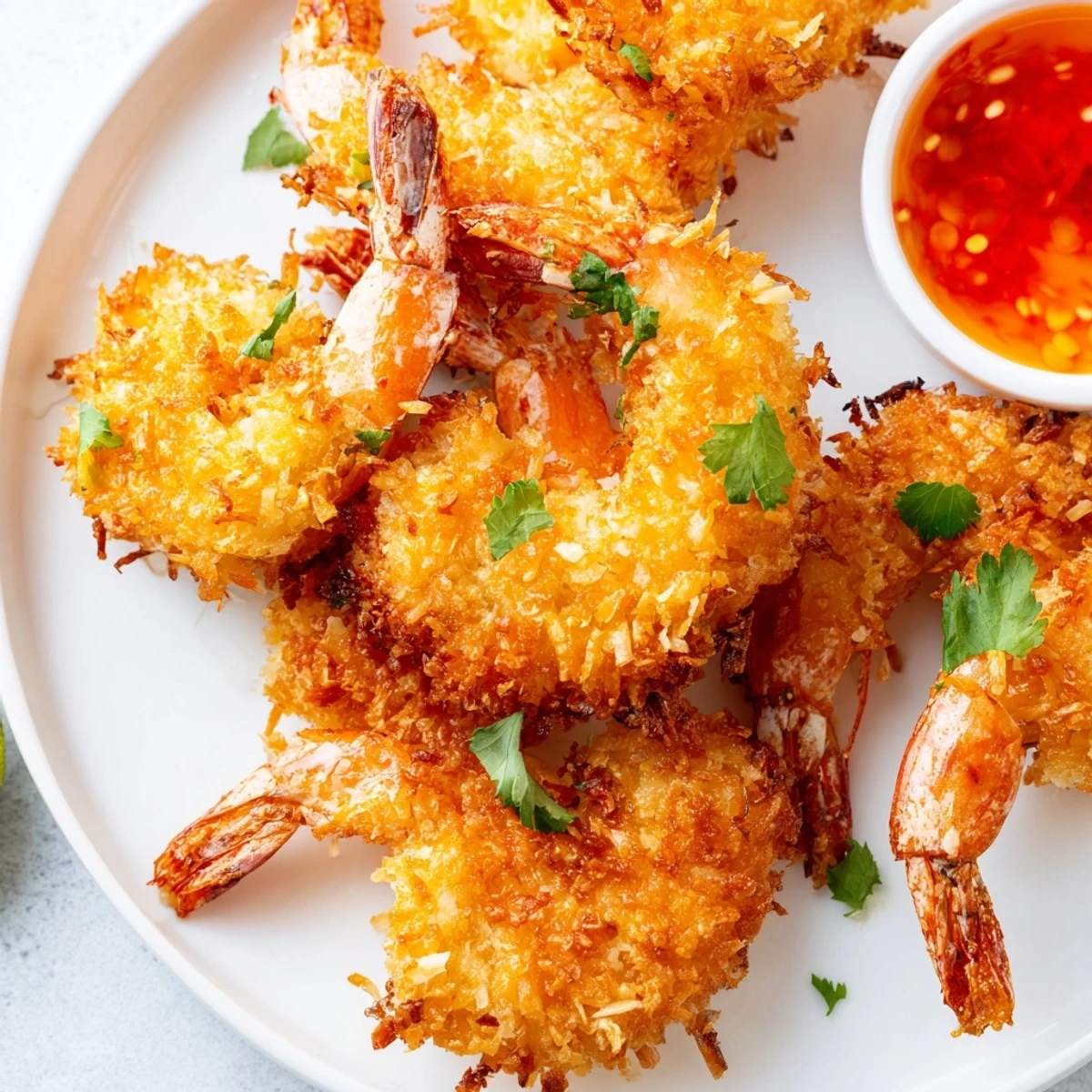
Save There is something satisfying about food that makes people forget all their table manners and reach in with their hands. These shrimp have that effect every single time.
Recipe FAQs
- → What type of shrimp works best for this dish?
-
Large raw shrimp, peeled and deveined with tails on, provide the ideal size and texture for even coating and frying.
- → How do I achieve a crispy coating?
-
Dredging shrimp in flour, then dipping in an egg-milk wash before coating thoroughly in a mix of shredded coconut and panko ensures a golden, crunchy crust.
- → Can I bake the shrimp instead of frying?
-
Yes, baking at 220°C (425°F) on a wire rack for 12–15 minutes yields a lighter but still crispy result with less oil.
- → How is the sweet chili sauce prepared?
-
Mix store-bought or homemade sweet chili sauce with fresh lime juice and optional cilantro to add brightness and balance the shrimp’s richness.
- → What are good serving suggestions with this dish?
-
Serve as an appetizer or party snack, paired wonderfully with light white wines such as Riesling or Sauvignon Blanc.
- → Can the breading be spiced for extra flavor?
-
Adding a pinch of cayenne pepper to the coconut-panko mixture introduces a pleasant heat and depth to the coating.