
 Save
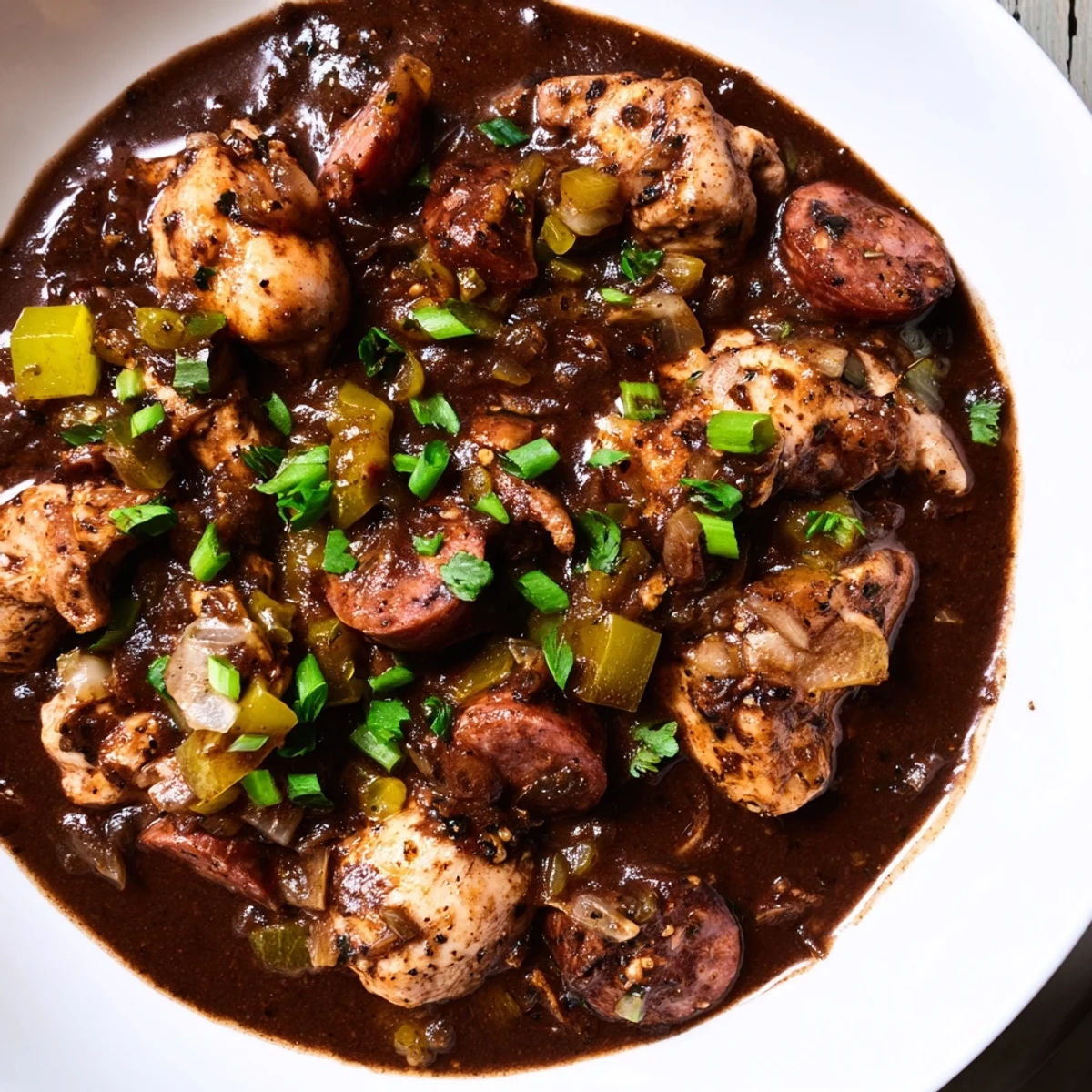
Save This rich Louisiana classic combines tender chicken thighs and smoky andouille sausage with the holy trinity of onion, bell pepper, and celery. A deeply browned roux forms the base, slowly simmered with fragrant spices including smoked paprika, cayenne, thyme, and bay leaves. The stew thickens with optional filé powder for authentic flavor, served over fluffy white rice and garnished with scallions and parsley. Perfect for a comforting, festive meal.
The first time I attempted a roux, I stood over that pot for forty-five minutes, arm aching, convinced I was doing something wrong. That rich chocolate color I was chasing seemed impossible until I caught a whifle of something nutty and deep, almost like toasted nuts meeting caramel. My roommate walked in and asked what smelled so incredible, and I realized I had finally crossed the threshold from nervous beginner to someone who understood patience.
I made this gumbo for a Fat Tuesday potluck last year, and my friend who grew up in Baton Rouge took one bite and went quiet. That is the real deal, he said, going back for seconds. We ended up sitting around the table for hours, talking about everything from jazz funerals to the perfect way to layer flavors, while the pot slowly emptied and someone kept finding reasons to go back for just a little more rice.
Ingredients
- Chicken thighs: Dark meat stays tender during long simmering and releases more flavor into the broth than breast meat ever could
- Andouille sausage: This smoky, spicy sausage is non-negotiable for authentic gumbo flavor, though any smoked pork sausage works in a pinch
- Vegetable oil and flour: The foundation of your roux, equal parts by volume, transforming into something magical with patience and constant stirring
- The holy trinity: Onion, bell pepper, and celery diced small, they melt into the roux and create the aromatic backbone of Creole cooking
- Chicken stock: Low-sodium lets you control the seasoning, and homemade stock makes this sing, but good quality store-bought works perfectly
- Thyme and bay leaves: These herbs provide that classic flavor profile everyone associates with gumbo, infusing the dish as it simmers
- Filé powder: Ground sassafras leaves thicken and add a unique earthy flavor, optional but traditional and worth seeking out
Instructions
- Craft your roux:
- Heat the oil in your heavy pot over medium heat, then gradually whisk in the flour until smooth. Stir constantly without stopping, adjusting heat as needed, until the roux darkens to the color of chocolate, about 15 to 20 minutes.
- Build the flavor foundation:
- Add your diced onion, bell pepper, and celery directly to the roux, stirring to coat everything. Cook for about 5 minutes until the vegetables soften and the mixture smells incredibly fragrant.
- Add the aromatics:
- Stir in the minced garlic and cook for just 1 minute until you can smell it, being careful not to let it burn.
- Brown the proteins:
- Add the sliced sausage and cook for 3 to 4 minutes, letting it develop some color. Add the chicken pieces along with your salt, pepper, paprika, cayenne, thyme, and bay leaves, stirring to coat everything in those spices.
- Simmer to perfection:
- Slowly pour in the chicken stock while stirring constantly to prevent lumps. Bring to a boil, then reduce heat to low and simmer uncovered for 45 to 60 minutes, stirring occasionally to prevent sticking.
- Finish and serve:
- Taste and adjust the seasoning, then stir in filé powder if using, just before serving. Remove the bay leaves and serve hot over white rice, topped with scallions and parsley.
 Save
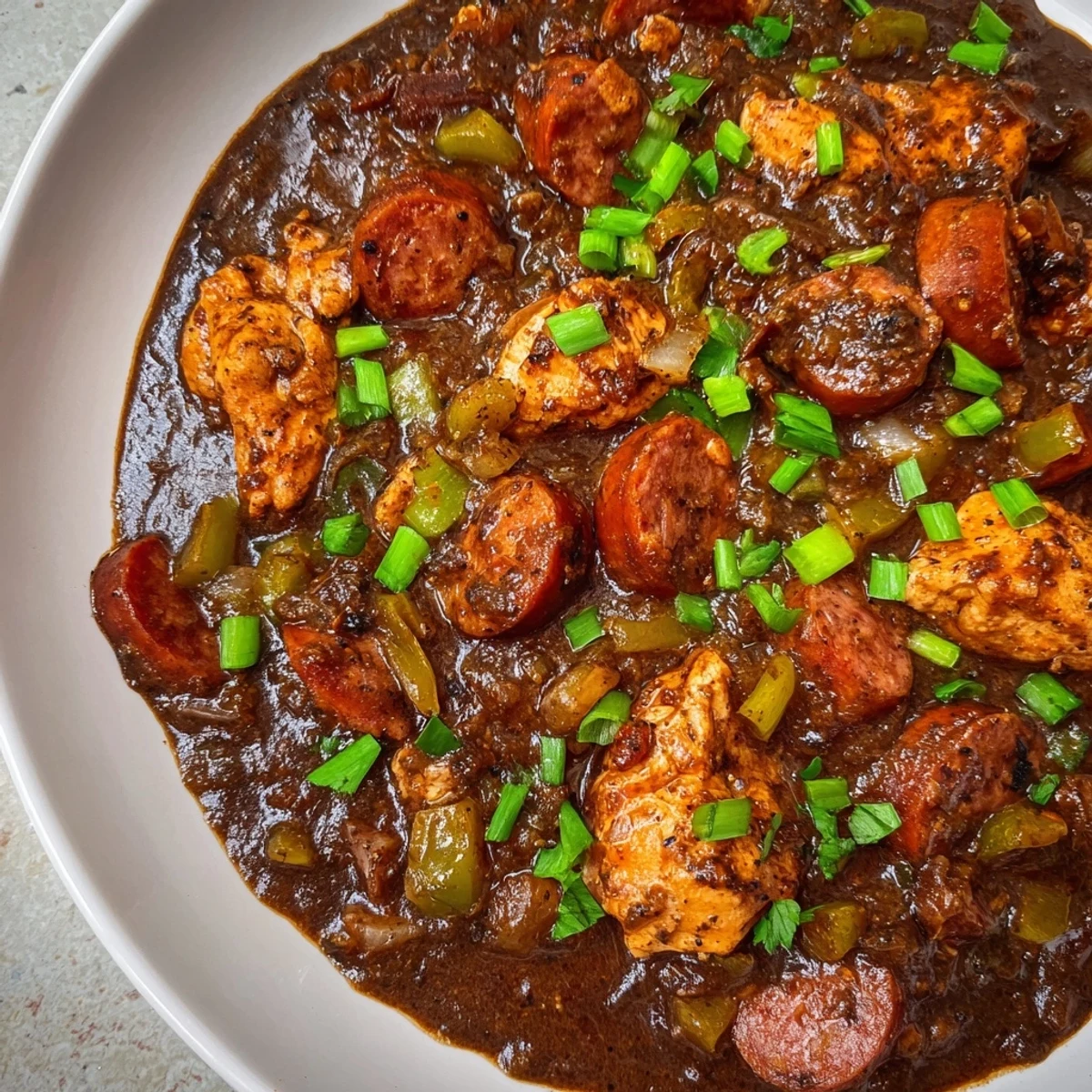
Save My sister called me at midnight once, asking if I remembered how our grandmother made her gumbo, and we ended up on the phone for an hour trading memories about Sunday dinners and the way her kitchen always smelled like bay leaves and comfort.
Mastering the Roux
The roux is everything in gumbo, the difference between something good and something unforgettable. I have found that a whisk works better than a spoon for the initial flour incorporation, then switch to a wooden spoon once the roux starts to darken.
Make It Your Own
While this traditional version is perfect on its own, gumbo welcomes variations. Shrimp added during the last ten minutes of cooking makes an incredible seafood gumbo, or substitute smoked turkey for some of the sausage for a lighter version that still packs plenty of flavor.
Serving Suggestions
Hot sauce on the table is absolutely mandatory, and crusty French bread for sopping up every last drop is non-negotiable in my house. Some people swear by potato salad on the side, a quirky Louisiana tradition that somehow works perfectly.
- Let guests garnish their own bowls with extra scallions and hot sauce
- Cool the gumba completely before refrigerating leftovers, it actually improves overnight
- Always serve with more rice than you think you need, people will want seconds
 Save
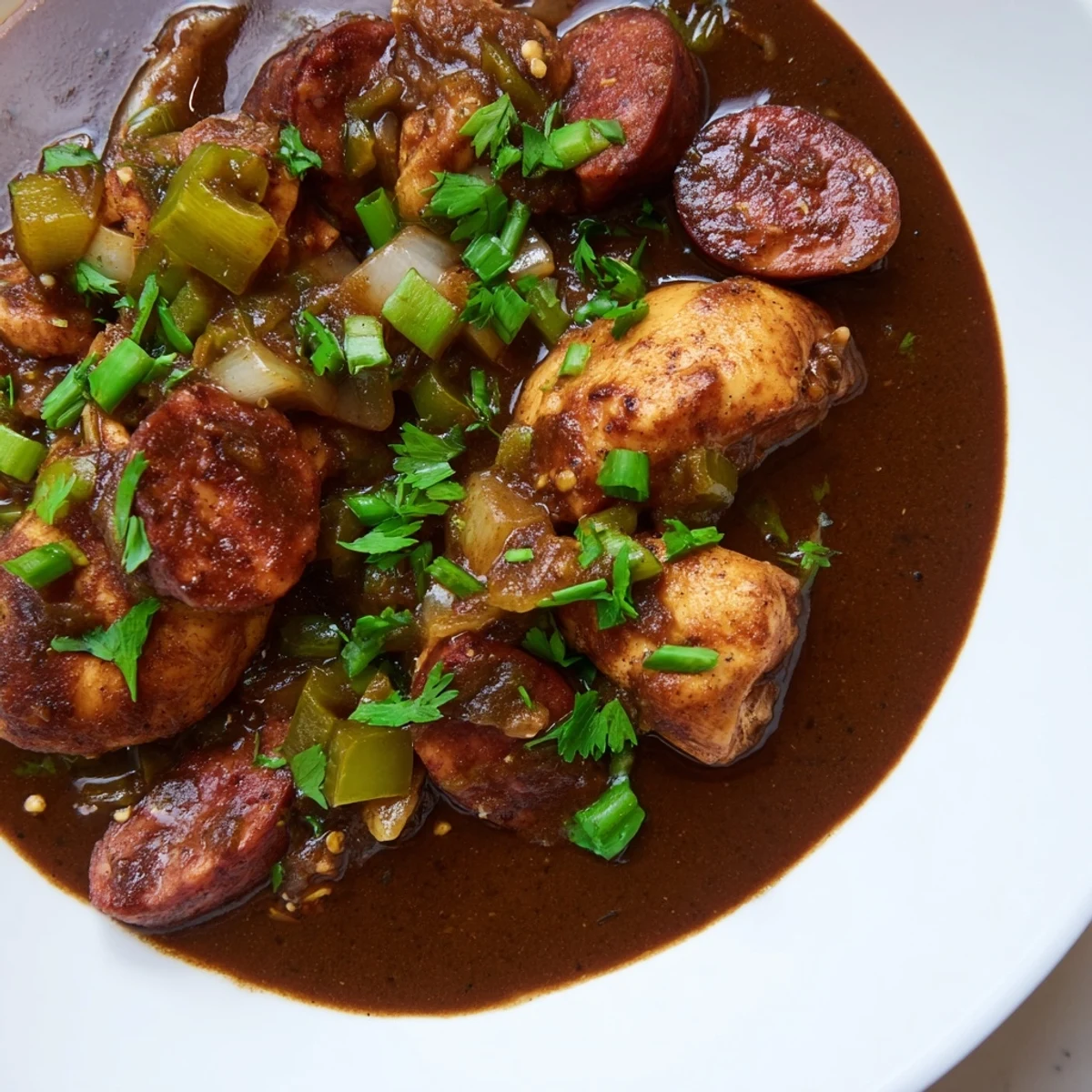
Save There is something about a pot of gumbo simmering on the stove that makes a house feel like home, like generations of cooks are standing right there with you, stirring and waiting and knowing good things come to those who wait.
Recipe FAQs
- → What is the holy trinity in this dish?
-
The holy trinity consists of diced onion, bell pepper, and celery, which form the aromatic flavor base for the gumbo.
- → How do I achieve the perfect roux color?
-
Cook the roux over medium heat, whisking constantly for 15–20 minutes, until it reaches a deep chocolate brown without burning.
- → Can I use other meats besides chicken and sausage?
-
Yes, smoked turkey or tasso ham can add depth. For variation, peeled shrimp can be added during the last 10 minutes of cooking.
- → What does filé powder do in the stew?
-
Filé powder thickens the gumbo and adds a unique earthy flavor typical of authentic Creole dishes.
- → How long should the stew simmer?
-
Simmer uncovered for 45–60 minutes, stirring occasionally to develop deep flavors and tender meat.
- → What is the best way to serve this dish?
-
Serve hot over cooked white rice, garnished with scallions and fresh parsley, with hot sauce and crusty French bread on the side.