
 Save
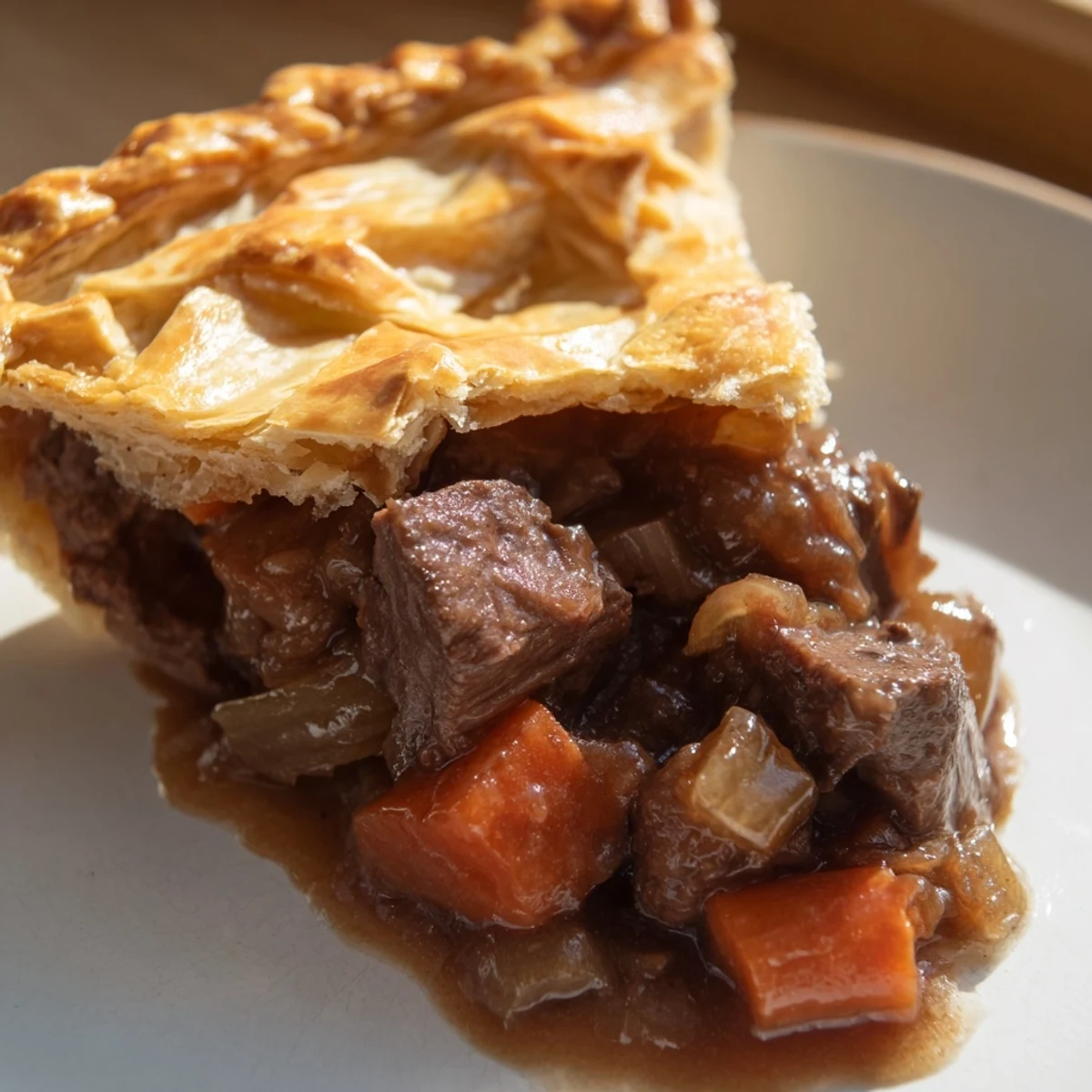
Save This dish combines tender cubes of beef chuck with sautéed onion, carrots, and celery in a deeply flavored ale-free gravy seasoned with herbs like thyme and rosemary. Encased in a buttery shortcrust pastry, it bakes to a golden crisp, making a comforting and hearty main dish. Ideal for a family meal, the filling simmers gently for hours to develop rich flavors, while the pastry provides a flaky, satisfying crust. Serve with mashed potatoes or steamed greens for a complete dinner.
There's something about the smell of beef browning in a hot pan that signals comfort is coming. My grandmother never made this pie the same way twice, but the principle was always the same—tender meat, vegetables softened into the gravy, all wrapped in pastry that shatters under your fork. I've learned that the secret isn't fancy ingredients; it's giving the filling time to become something greater than its parts. This version skips the ale but loses nothing in depth.
I made this for my partner on a cold Tuesday when neither of us had energy for anything complicated, but we both craved something that felt like home. Watching them break through that golden crust and see the steam rise from the filling—that's when I knew this recipe had earned its place in regular rotation.
Ingredients
- Beef chuck or stewing steak (800 g): The marbling and connective tissue break down during cooking, creating a naturally silky gravy—don't use lean cuts or you'll end up with tough, stringy meat.
- Olive oil (2 tbsp): High enough heat to get a proper brown crust on the beef, which builds flavor for the entire dish.
- Onion, carrots, and celery: These aren't just filler; they sweeten as they cook and thicken the gravy with their natural starches.
- Garlic (2 cloves): Mince it fine so it dissolves into the sauce rather than leaving harsh chunks.
- Tomato paste (2 tbsp): Adds umami depth and a subtle sweetness that balances the savory gravy—don't skip it.
- Plain flour (2 tbsp): This thickens the gravy and also helps create that silky mouthfeel as it cooks into the beef stock.
- Beef stock (400 ml): Quality matters here; weak stock means a weak gravy, so use the best you can find.
- Worcestershire sauce (1 tbsp): This is your umami anchor—it deepens everything without tasting like Worcestershire itself.
- Dried thyme and rosemary (1 tsp each): Dried herbs work better in long braises than fresh; they don't lose their punch over time.
- Bay leaves (2): Remove them before serving—they're flavor architects, not meant to be eaten.
- Shortcrust pastry (375 g): Ready-rolled saves time without sacrificing quality; if you make your own, make sure it's cold before topping the pie.
- Beaten egg: This creates that mahogany shine and crispy finish, so don't skip the egg wash.
Instructions
- Brown the beef properly:
- Heat the oil until it's almost smoking, then work in batches so the meat sears instead of steams. Listen for that satisfying sizzle—it means the Maillard reaction is happening and building deep flavor. Don't rush; this step is where most of the taste lives.
- Build the aromatic base:
- After the beef is out, sauté the onion, carrots, and celery until they soften and turn golden at the edges. They should smell sweet and almost caramelized; that's your signal they've given everything they have to the pan.
- Make the paste:
- Stir in the garlic, cook for a breath, then add tomato paste and flour together. Stir constantly for two minutes—this cooks out the raw flour taste and lets the paste deepen.
- Deglaze and season:
- Pour in the stock slowly, scraping the bottom of the pan with your wooden spoon to loosen all those stuck-on bits. That's flavor you can't buy; keep scraping.
- Braise low and slow:
- Return the beef, add your herbs and Worcestershire, then let it simmer gently for 90 minutes with the lid on. Peek occasionally and stir; the meat should be falling apart when a spoon touches it, and the gravy should coat the back of a spoon.
- Cool and transfer:
- Let the filling cool completely—this matters because cold filling won't make your pastry soggy or shrink away from the edges. Spoon it carefully into your pie dish, leaving a bit of space at the top.
- Top with pastry:
- Lay the pastry over the filling, press the edges to seal, and trim any overhang. Cut a small vent in the center so steam can escape; without it, your bottom crust will be soggy.
- Glaze and bake:
- Brush beaten egg all over the pastry and bake at 180°C for 30 to 35 minutes until it's golden and crisp. The pie is done when the pastry sounds hollow if you tap it gently.
 Save
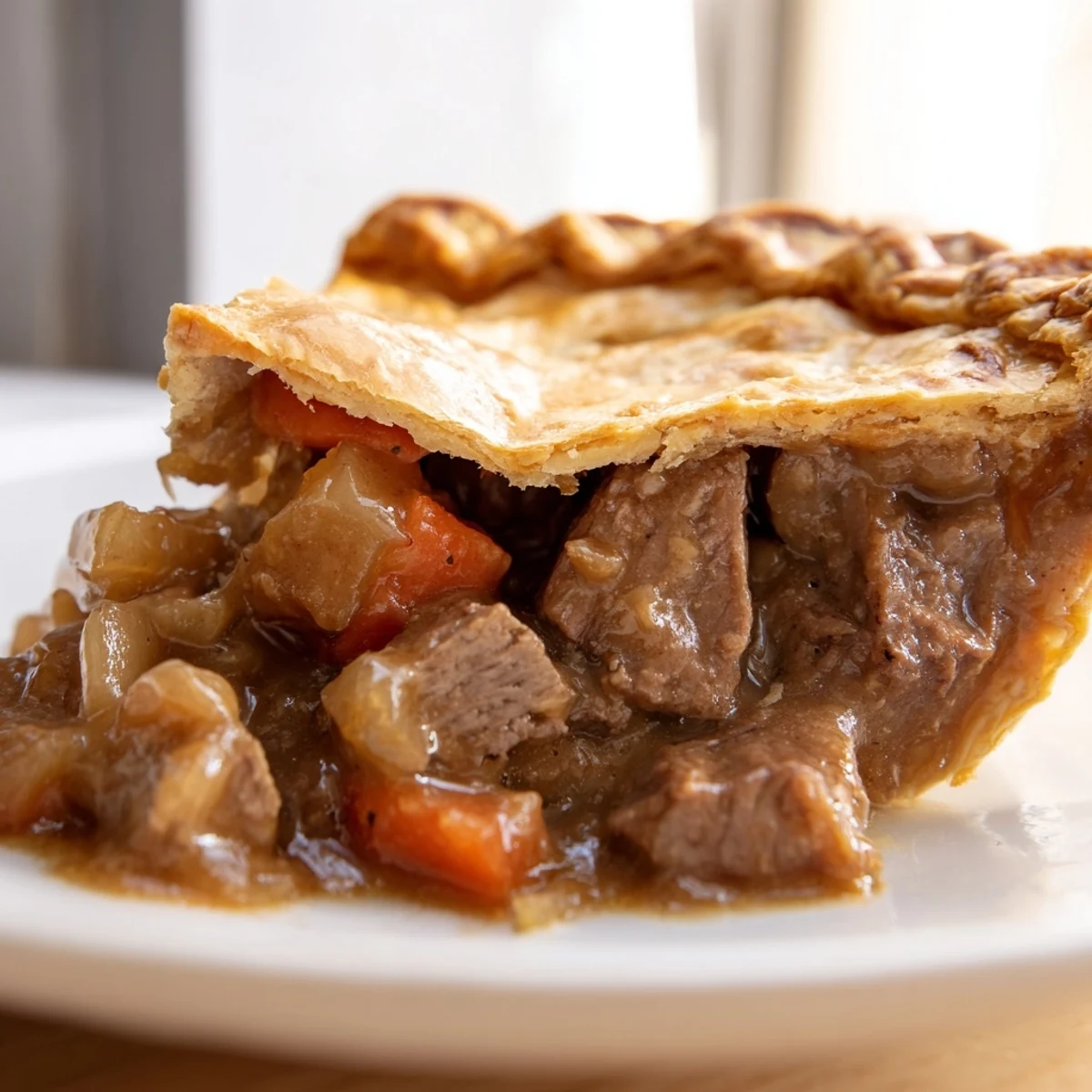
Save My friend Sarah came over expecting takeaway conversation, but instead left talking about how a pie—something so simple—could taste like someone had been in the kitchen for a week. That's when it hit me that cooking isn't always about impressing; sometimes it's just about showing up with something warm and real.
The Power of Resting Meat
Tender beef doesn't happen by accident—it happens when you give the collagen time to break down into gelatin under gentle heat. Most of my early pies had tough meat because I either rushed the cooking or used the wrong cut. Now I always reach for chuck or stewing steak, which are marbled with fat and connective tissue that becomes your gravy's best friend. The longer, gentler braise means the meat doesn't fight back when you bite into it.
Why Pastry Matters More Than You Think
A pie is only as good as its crust, and a soggy bottom is the tragedy that haunts bakers everywhere. I've learned to cool the filling completely, cut a steam vent, and brush the pastry with egg wash for that golden finish that doesn't just look beautiful—it actually seals in the crispness. Some people dock the pastry (poke it with a fork), but I find a proper vent works just as well without the extra fuss.
Flexibility Without Losing Heart
This pie is forgiving in ways that matter. You can swap beef for lamb, add a splash of balsamic vinegar or a tiny spoon of Marmite to deepen the gravy, or throw in mushrooms and pearl onions if you want texture variation. The structure stays the same, but the flavor becomes yours.
- A teaspoon of Marmite added with the tomato paste brings savory complexity that surprises people.
- If using lamb, add mint to the filling instead of one of the thymes; it's a small change with big impact.
- Bake a day ahead and reheat gently—it gives the flavors time to marry and actually tastes better the next day.
 Save
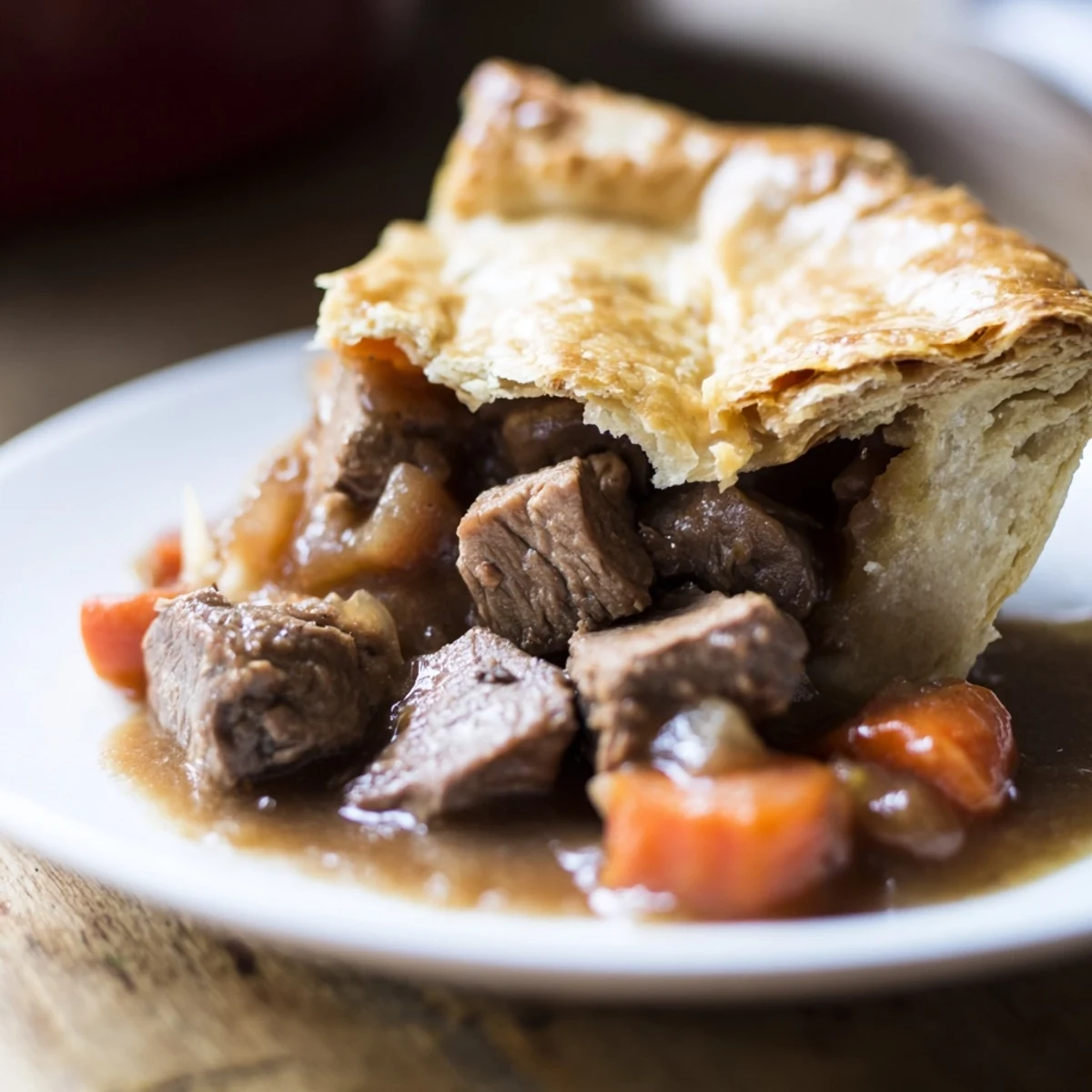
Save There's quiet satisfaction in sliding a finished pie out of the oven, golden and steaming, knowing you built something nourishing from beef and time. This is the kind of cooking that matters.
Recipe FAQs
- → What cut of beef is best for this dish?
-
Beef chuck or stewing steak works well due to its tenderness after slow cooking.
- → Can I make the filling ahead of time?
-
Yes, prepare the filling in advance and refrigerate; reheat gently before baking with the pastry.
- → How to ensure the pastry stays crisp?
-
Brush the pastry with beaten egg before baking and bake at 180°C until golden to achieve a crisp crust.
- → Is it possible to use a vegetarian alternative?
-
Yes, replace beef with a mix of root vegetables and use vegetable stock for a rich, meat-free option.
- → What side dishes pair well with this pie?
-
Mashed potatoes and steamed greens complement the rich filling and flaky crust perfectly.