
 Save
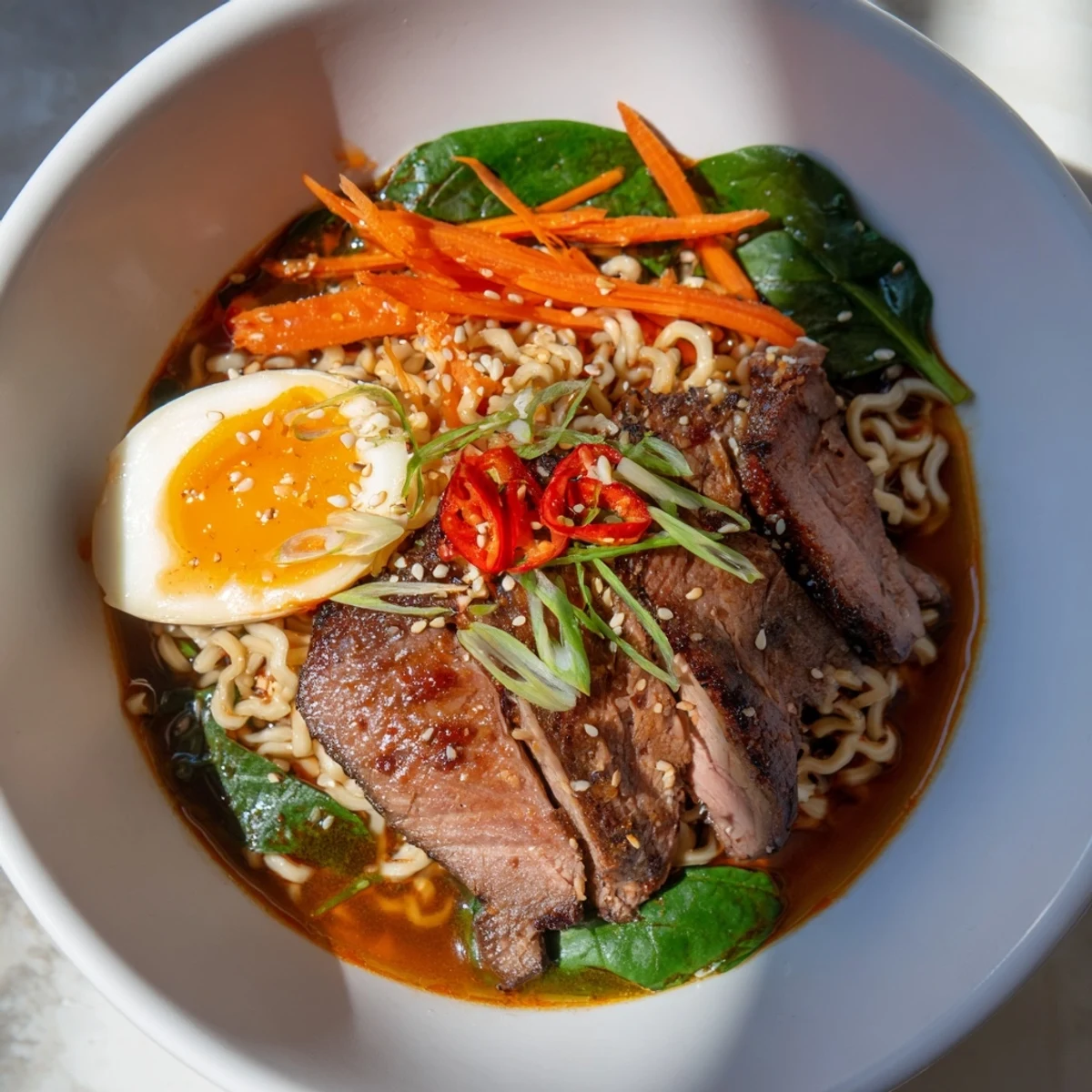
Save This spicy beef ramen features tender slices of marinated beef simmered in a flavorful broth enriched with garlic, ginger, and chili paste. Fresh ramen noodles soak up the spicy, savory broth, while blanched greens add freshness and texture. A perfectly soft boiled egg crowns each bowl, providing a rich, silky contrast. The dish is balanced with hints of miso, soy, mirin, and sesame oil, creating layers of deep umami and heat. Ideal for cozy nights or sharing with friends, this vibrant bowl blends comforting flavors with a satisfying kick.
I discovered this ramen on a freezing January night when my neighbor knocked on the door with a container of homemade broth and a story about learning to cook it from his grandmother in Tokyo. We heated it up together in my kitchen, and I was struck by how a simple bowl of noodles could warm not just your belly but something deeper. Now whenever I make it, I chase that same feeling—the kind of comfort that tastes like someone genuinely cares about feeding you well.
My friend Maya came over complaining about a bad day at work, and I threw together this ramen while she sat at my counter telling me everything. By the time the broth was simmering and the beef was sizzling, her whole mood had shifted—not because of magic, but because something warm and intentional was being made just for her. She still texts me asking when I'm making it again.
Ingredients
- Flank or sirloin steak (300g): Thin slices cook in seconds and stay tender; I learned to slice against the grain after one chewy attempt taught me better.
- Soy sauce, sesame oil, black pepper (for beef): This trio creates a quick marinade that infuses the meat while you focus on the broth—no complicated prep needed.
- Vegetable oil: A neutral base that lets the gochujang and miso shine without competing flavors.
- Garlic and fresh ginger: The smell of these hitting hot oil is the signal that something delicious is happening; don't skip the mincing.
- Gochujang and miso paste: Gochujang brings the heat and depth, while miso adds umami richness that makes people ask what your secret ingredient is.
- Mirin and rice vinegar: These balance the spice with a subtle sweetness and tang that prevents the broth from feeling one-dimensional.
- Beef or chicken stock (1 liter): The foundation of everything; homemade is ideal, but quality store-bought works beautifully.
- Fresh ramen noodles: Chewy and authentic; dried works in a pinch, but fresh noodles absorb the broth differently.
- Eggs: Six to seven minutes of boiling gives you that perfect jammy center that oozes into the broth.
- Baby spinach or bok choy: A quick blanch adds color and nutrition without getting in the way of the main flavors.
- Carrot, scallions, sesame seeds, and nori: These final touches are where you taste the thought that went into plating—they matter more than you'd think.
Instructions
- Coat the beef:
- Mix your sliced beef with soy sauce, sesame oil, and black pepper in a bowl. Let it sit while you work on everything else—the marinade is short but mighty.
- Boil the eggs:
- Gently lower room-temperature eggs into boiling water and set a timer for exactly 6 to 7 minutes. The moment it goes off, fish them out and plunge them into ice water—this stops the cooking and gives you that creamy, jammy center.
- Build the broth:
- Heat oil in a large pot over medium heat, then add garlic and ginger and let them perfume the oil for a minute. Stir in gochujang, miso, soy sauce, mirin, and rice vinegar, cooking just long enough for everything to blend into a deep reddish paste before pouring in your stock and water.
- Sear the beef:
- Get a skillet screaming hot, then sear those thin beef slices for 2 to 3 minutes total—you want color and warmth, not hockey pucks. The beef finishes cooking in the residual heat as it rests.
- Cook the noodles:
- Follow package instructions, then drain and divide into four bowls. Fresh noodles take about 3 minutes; dried might need 4 to 5.
- Wilt the greens:
- Toss spinach or bok choy directly into the simmering broth and fish it out after a minute or two with tongs—it should be tender but still bright green.
- Bring it together:
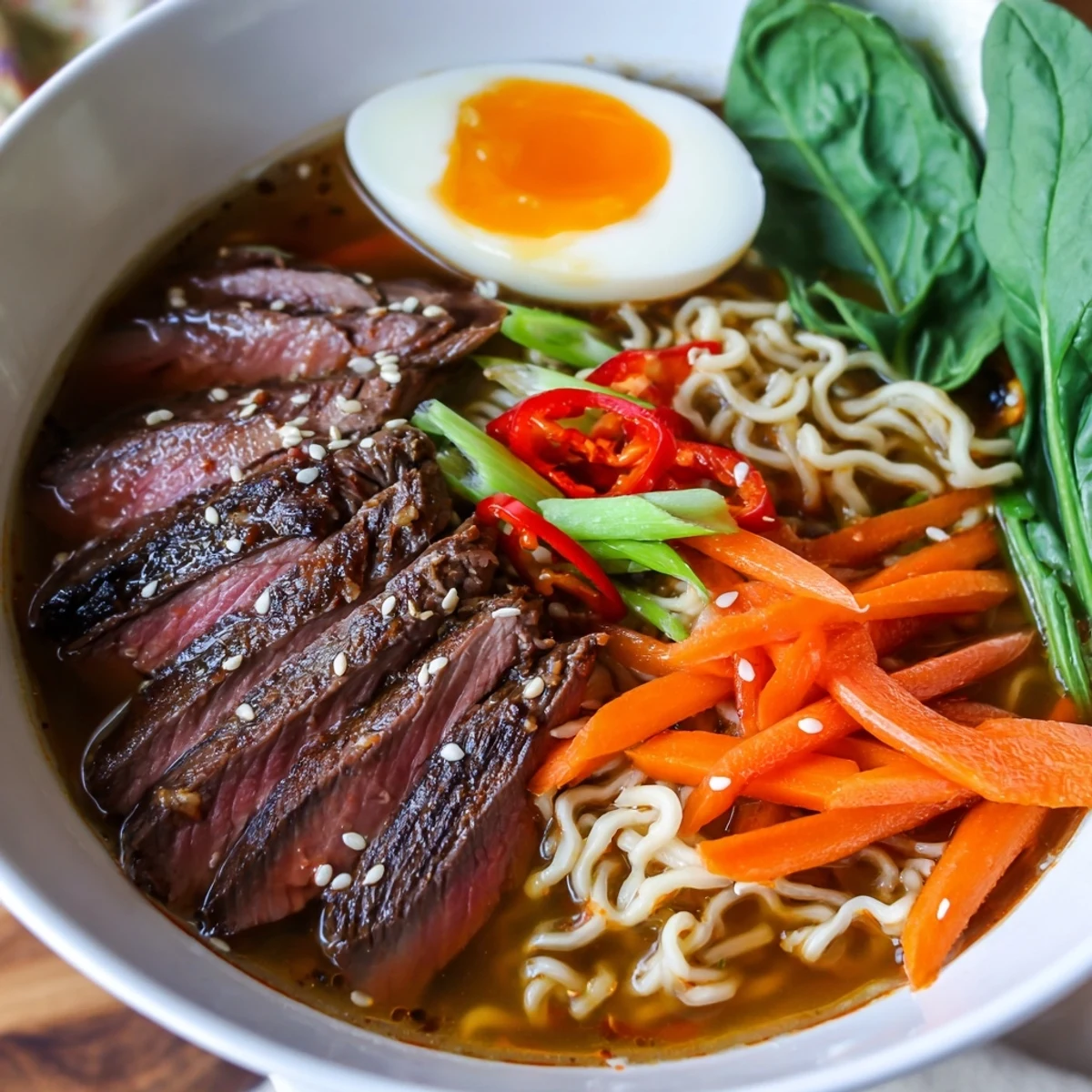
- Ladle the hot broth and all its flavors over the noodles, then arrange your beef, greens, carrots, and a halved egg in the bowl like you're plating something that matters. Finish with scallions, sesame seeds, and nori strips.
 Save
Save There's a moment after the first slurp, when the broth coats your tongue and the egg yolk releases its warmth into the noodles, where you realize you made this from separate parts and somehow it became whole. That's when ramen stops being dinner and becomes proof that cooking for someone is actually just organized love.
Playing with Heat
Spice tolerance is personal, and this broth lets you be honest about yours without compromising flavor. I started at one tablespoon of gochujang and gradually learned how much made my palate sing instead of burning it out. The ginger and miso carry their own warmth too, so reducing the chili paste doesn't mean a bland bowl—just a different kind of satisfaction. Some nights I add fresh sliced Thai chilies for an extra kick; other nights I go easy and focus on the other layers. The beauty is that you're in control, not following someone else's pain tolerance.
Why Fresh Noodles Matter
I used to think dried and fresh ramen were interchangeable, but the texture difference changed my mind. Fresh noodles absorb the broth differently—they stay chewy without turning to mush—and they have a subtle sweetness that dried noodles don't quite capture. If you can find them in the refrigerated section of an Asian grocery store, grab them. They're usually only slightly more expensive and worth every penny. In a pinch, dried works, but fresh transforms this from a quick dinner into something you actually look forward to making.
Making It Your Own
This recipe is a starting point, not a strict rulebook. I've made versions with shiitake mushrooms instead of beef, added a splash of sesame oil just before serving for extra richness, and even thrown in kimchi when I wanted the broth to feel even spicier and more fermented. The noodles and broth are the skeleton; the beef, egg, and vegetables are where you get to decide what matters.
- Try adding tofu, mushrooms, or soft shrimp if beef doesn't speak to you.
- A poached egg instead of soft boiled gives a different texture if you're in that kind of mood.
- A drizzle of chili oil after plating adds heat and a beautiful finish without overwhelming the other flavors.
 Save
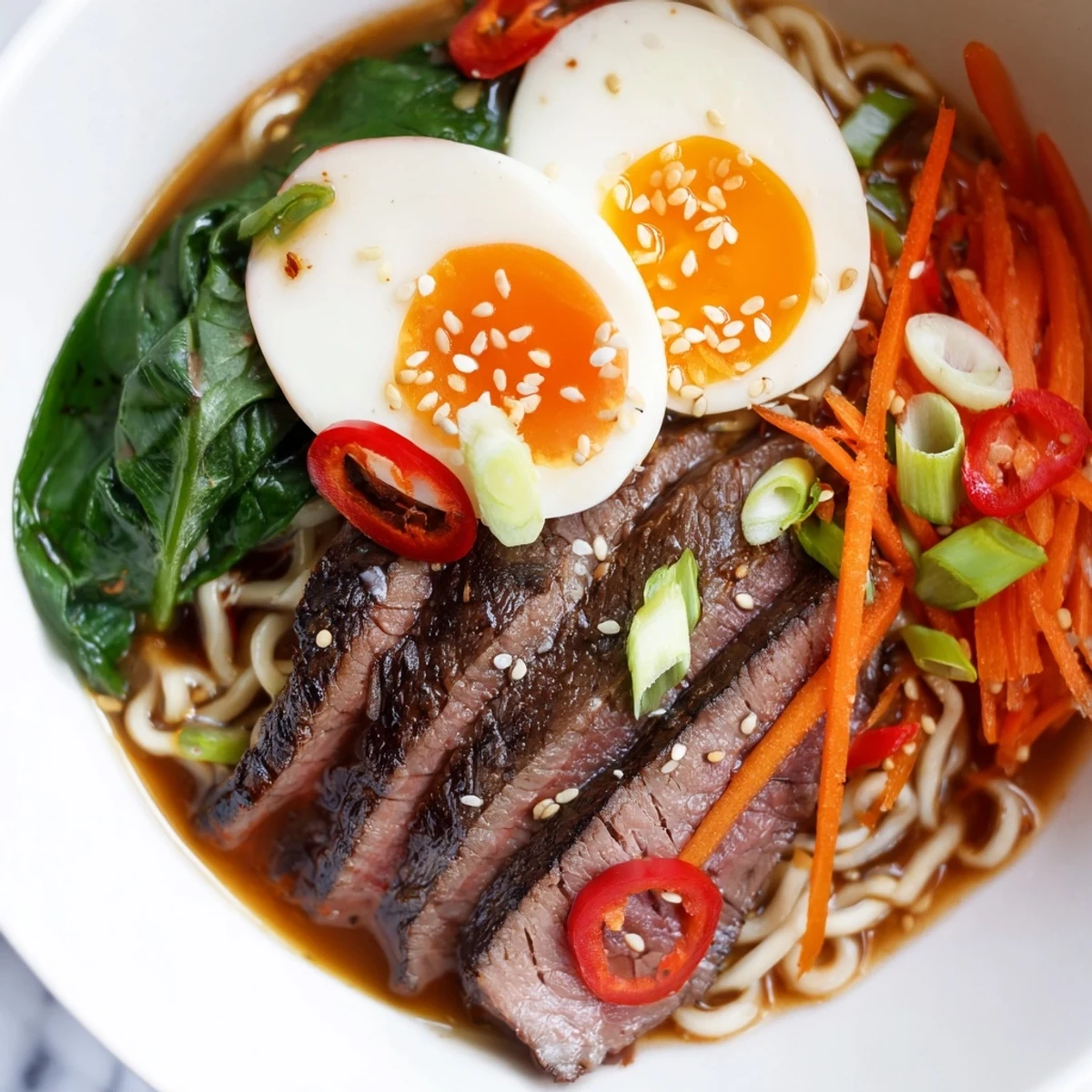
Save Ramen is one of those dishes that feeds both hunger and the small ache for something warm and made with care. It's worth the thirty minutes and the few dishes afterward.
Recipe FAQs
- → How do I achieve a perfectly soft boiled egg?
-
Boil eggs for 6–7 minutes then transfer them immediately to an ice bath to stop cooking. This yields a tender white and creamy yolk.
- → Can I substitute the beef with a vegetarian alternative?
-
Yes, marinated tofu works well for a plant-based option without compromising flavor.
- → What type of noodles work best in this dish?
-
Fresh ramen noodles are preferred for their chewy texture, but dried noodles can be used as a convenient alternative.
- → How can I adjust the spice level?
-
Modify the amount of gochujang or Sriracha in the broth to make it milder or spicier according to your taste.
- → What greens pair well with this ramen?
-
Baby spinach or bok choy add a fresh, mild crunch when briefly blanched in the broth.
- → Is it possible to prepare the broth in advance?
-
Yes, the broth can be made ahead and gently reheated before assembling the dish.