
 Save
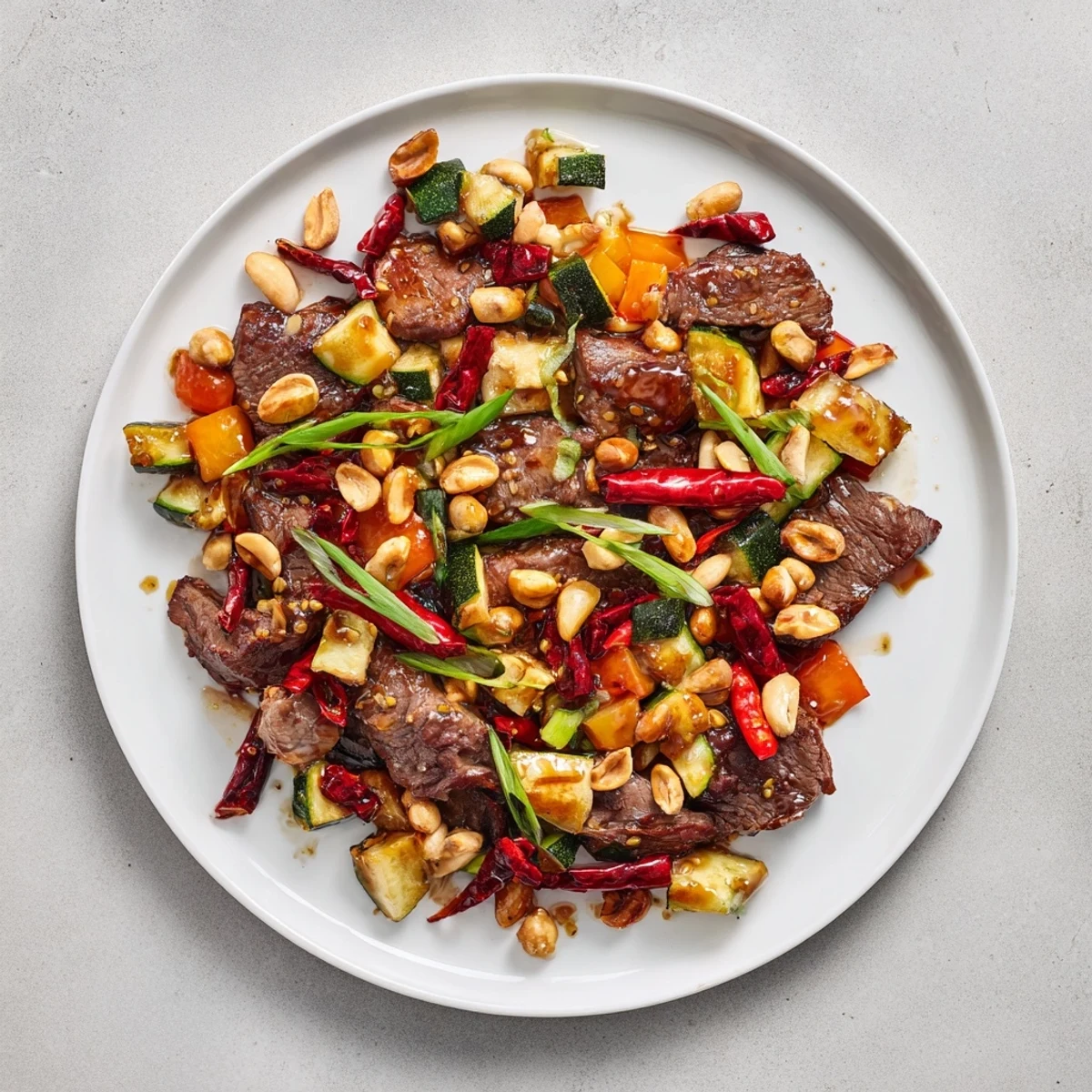
Save This vibrant Kung Pao Beef features tender flank steak seared until caramelized, then tossed with roasted peanuts, crispy bell peppers, and zucchini in a complex sauce of soy, vinegar, and hoisin. The dried chilies create an aromatic base that builds heat without overwhelming the dish. Ready in just 35 minutes, it's perfect for weeknight stir-fry dinners.
The sizzle of hot oil hitting my wok transports me straight to the bustling streets of Sichuan province. I discovered Kung Pao Beef during a rainy afternoon cooking session with my Chinese neighbor who insisted real Kung Pao needs that perfect balance of heat, sweet, and savory. What started as a kitchen experiment has become my go-to impressive dinner when friends come over.
Last winter during a power outage, I made this by candlelight for my stranded neighbors. We huddled around steaming plates of Kung Pao beef, its spicy warmth providing comfort against the cold darkness. Someone joked that the chili peppers were generating electricity, and for that moment, the blackout felt almost magical rather than inconvenient.
Ingredients
- Flank steak: Slice it super thin against the grain for that melt in your mouth tenderness, I learned this after many chewy failures with the wrong cut direction.
- Dried red chilies: These little fire bombs are what give authentic Kung Pao its soul, remove some seeds for less heat or leave them all in if you enjoy that numbing spice experience.
- Chinese black vinegar: The secret weapon that gives that distinctive tangy depth, I keep a bottle just for this dish, though balsamic works in a pinch.
- Roasted unsalted peanuts: They transform from supporting character to star of the show when they soak up that rich sauce.
Instructions
- Prep your protein properly:
- In a bowl, mix those thin slices of flank steak with soy sauce, Shaoxing wine, and cornstarch until every piece is coated. Let it rest for 15 minutes while you chop vegetables, this brief marinade makes all the difference in tenderness.
- Create your liquid gold:
- Whisk together light and dark soy sauces, black vinegar, hoisin, sugar, sesame oil, cornstarch and water until smooth. This sauce will transform from thin to glossy in the final cooking moments.
- Master the sear:
- Get your wok screaming hot before adding oil, then spread the marinated beef in a single layer. Let it sit untouched for 30 seconds before stirring to achieve that beautiful caramelization.
- Build the flavor base:
- With fresh oil, dance those dried chilies around the wok until they perfume your kitchen, then add garlic, ginger and spring onion whites. Your senses will tell you when its time for the next step as the aromatics become fragrant.
- Add the rainbow:
- Toss in bell peppers and zucchini, keeping them moving constantly. Youre looking for them to soften slightly while maintaining their vibrant colors and slight crunch.
- Bring it all together:
- Reunite the beef with its vegetable friends, add those crunchy peanuts, then pour your sauce around the sides of the wok. Everything will come together as you toss and the sauce thickens, coating each piece in glossy perfection.
- Finish with flourish:
- Kill the heat and scatter those fresh green onion tops across your creation. The residual warmth will slightly wilt them, releasing their mild onion perfume across the dish.
 Save
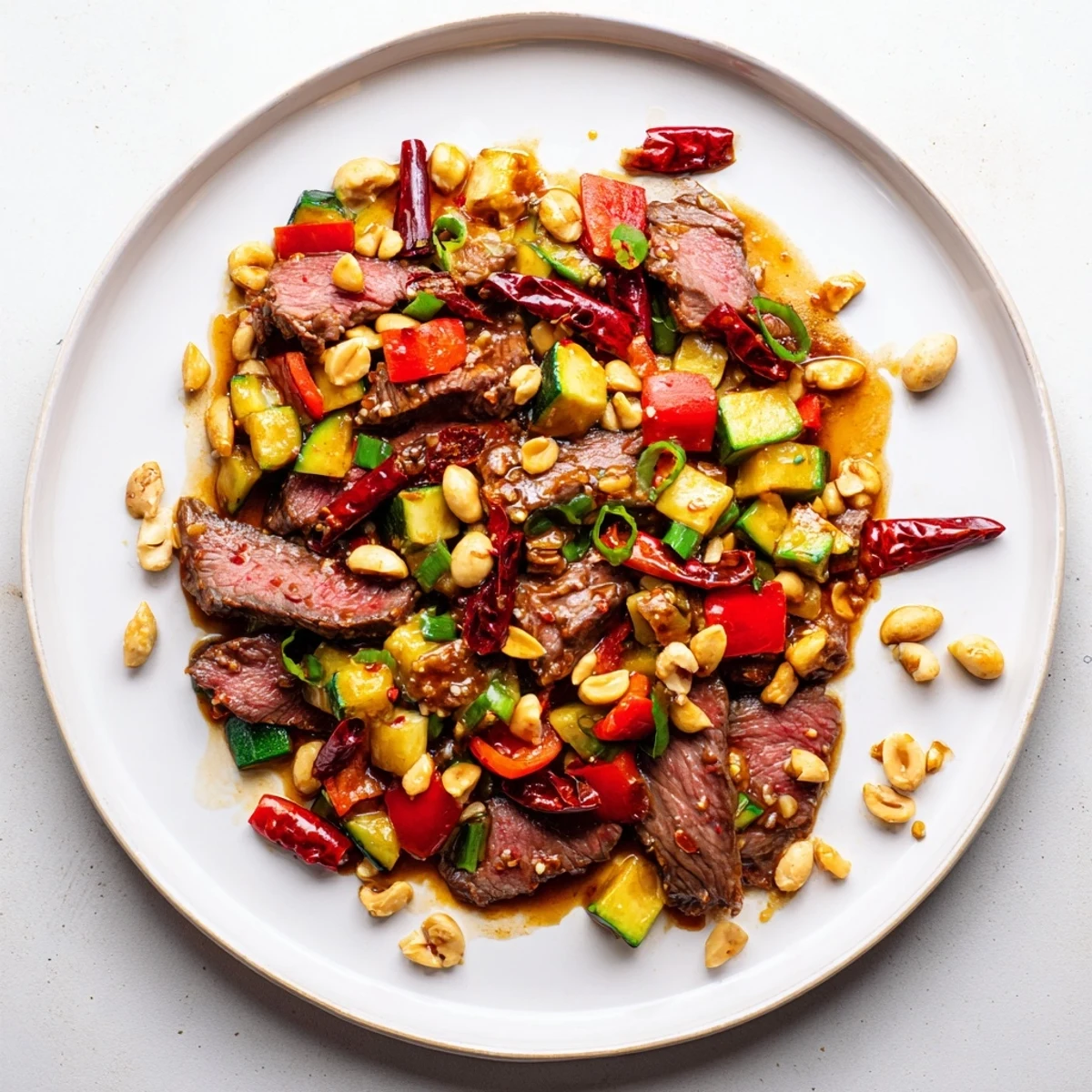
Save My daughter who typically runs from anything spicier than ketchup surprised me by requesting this Kung Pao Beef for her birthday dinner. As we sat around the table, her friends wide eyed at the bold flavors, I watched her confidently explain the dish to them with such pride. In that moment, it wasnt just dinner, but a bridge between cultures and generations happening right at our kitchen table.
Balancing The Heat
Finding your spice sweet spot takes experimentation. For my family, I use 6 chilies with seeds removed for the adults and set aside a small portion before adding chilies for the kids. The beautiful thing about this dish is how it can be customized from mild to wild without losing its essence.
Vegetable Variations
While bell peppers and zucchini are my go to, Ive successfully swapped in snap peas, carrots, water chestnuts, or bamboo shoots depending on whats in my fridge. The sauce is so accommodating that nearly any firm vegetable that can handle a quick stir fry works beautifully.
Serving Suggestions
The sauce in this dish begs for something to soak it up, making steamed jasmine rice the perfect companion. Sometimes I push tradition aside and serve it with garlic noodles for an indulgent fusion twist.
- For a complete meal, start with a simple hot and sour soup to wake up the palate.
- A side of quick pickled cucumbers provides a cool, acidic contrast to the rich spiciness.
- Skip the rice and serve in lettuce cups for a lower carb option that still captures all that sauce.
 Save
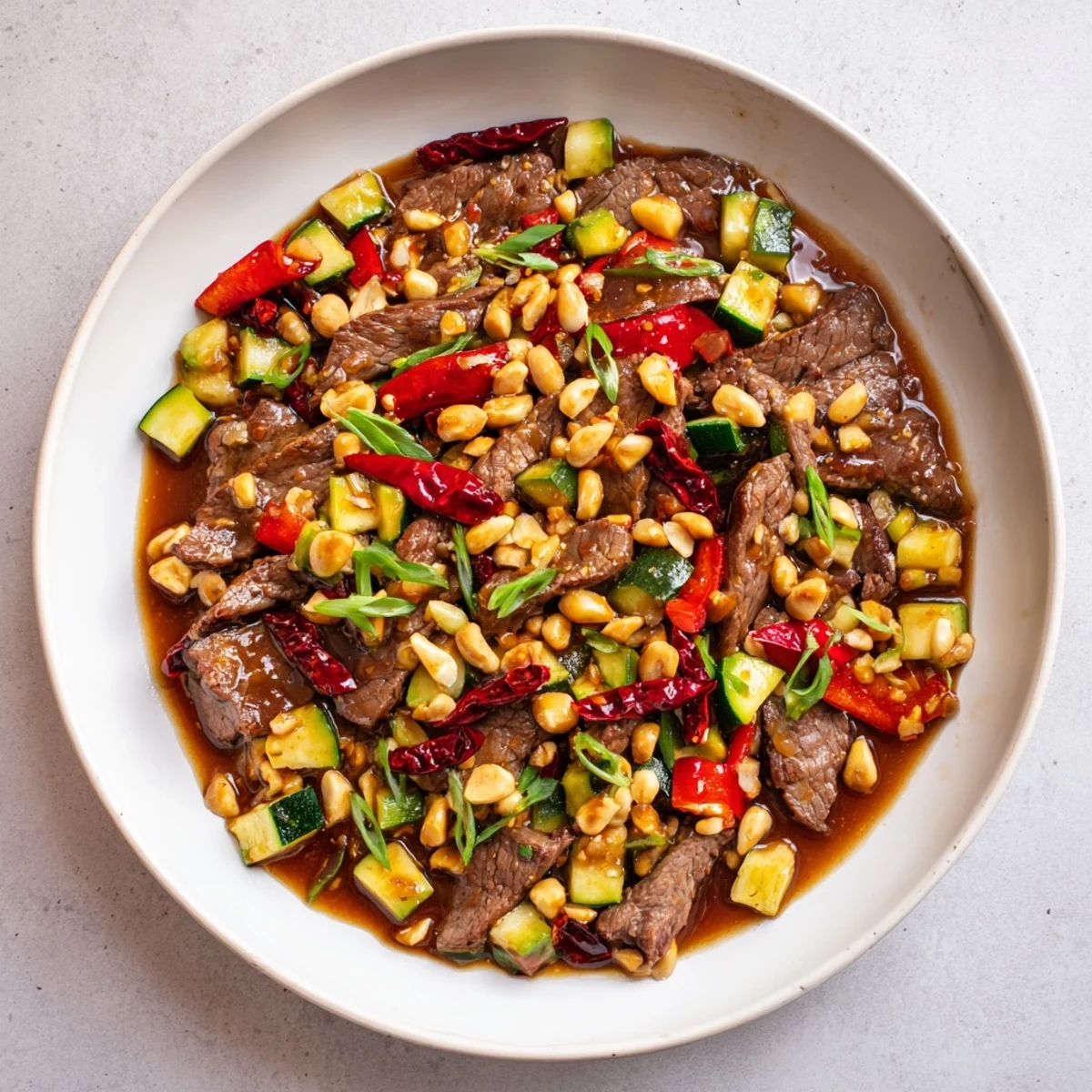
Save This Kung Pao Beef has become more than a recipe in my collection, its a reminder that good food builds connections. Whether youre cooking to impress or simply to nourish, these bold flavors will bring a little adventure to your dinner table.
Recipe FAQs
- → Can I use a different cut of beef?
-
Yes, sirloin, ribeye, or even lean ground beef work well. Slice against the grain if using a whole cut to ensure tenderness.
- → How do I control the spice level?
-
Remove chili seeds before cooking for milder heat, or leave them in and add extra chili oil for more kick. You can also reduce the number of dried chilies.
- → What's the best rice to serve with this?
-
Jasmine rice is traditional and pairs beautifully with the savory sauce. Steamed white rice or brown rice also work well to balance the bold flavors.
- → Can I substitute the peanuts?
-
Absolutely. Cashews or almonds provide a similar crunch. For allergies, try water chestnuts or sesame seeds for textural contrast.
- → Is this dish gluten-free?
-
Most ingredients are naturally gluten-free, but check your soy sauce and hoisin labels. Use tamari and certified gluten-free hoisin for a safe option.
- → How long can leftovers keep?
-
Store in an airtight container in the refrigerator for up to 3 days. Reheat gently in a wok to maintain texture, or enjoy cold over salad greens.