
 Save
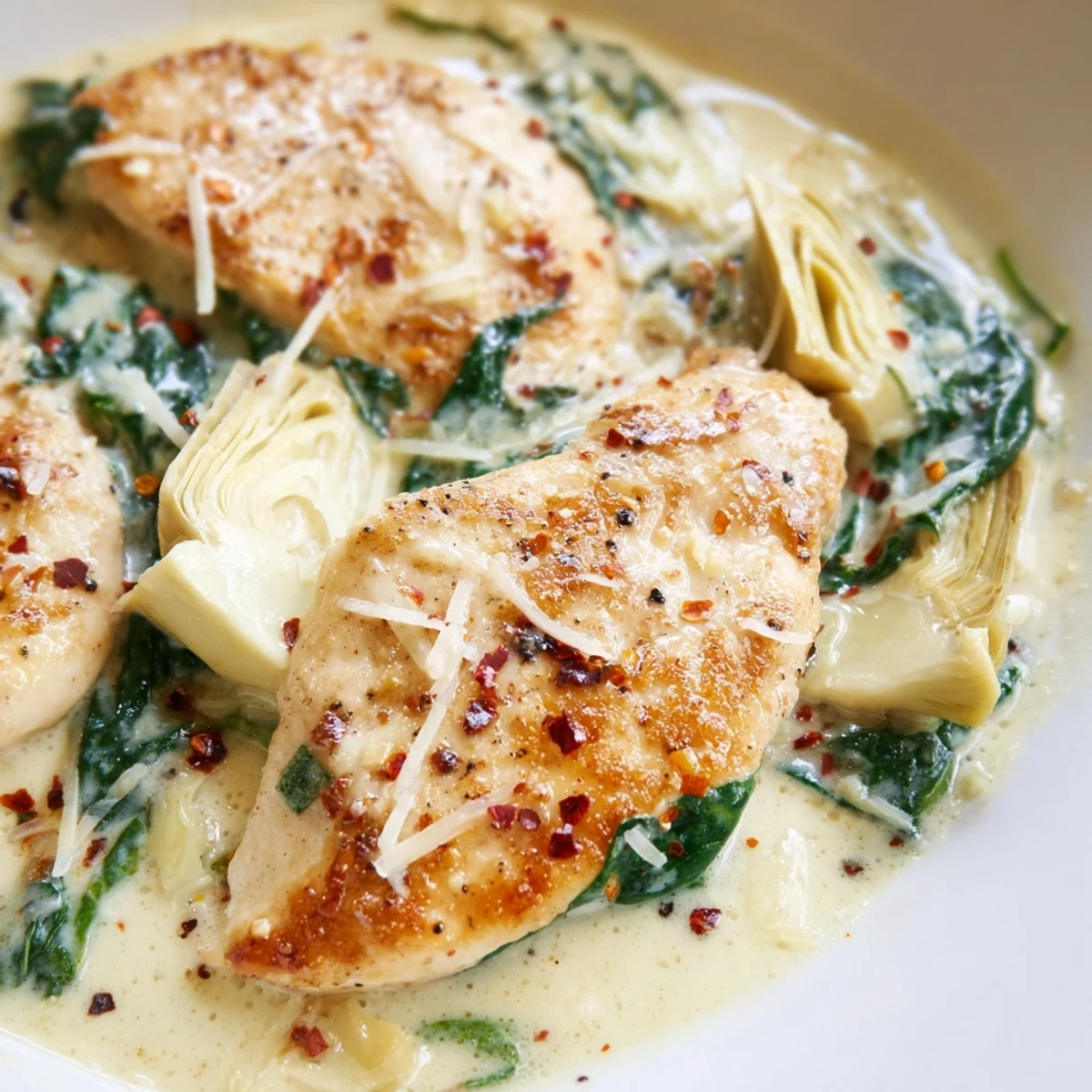
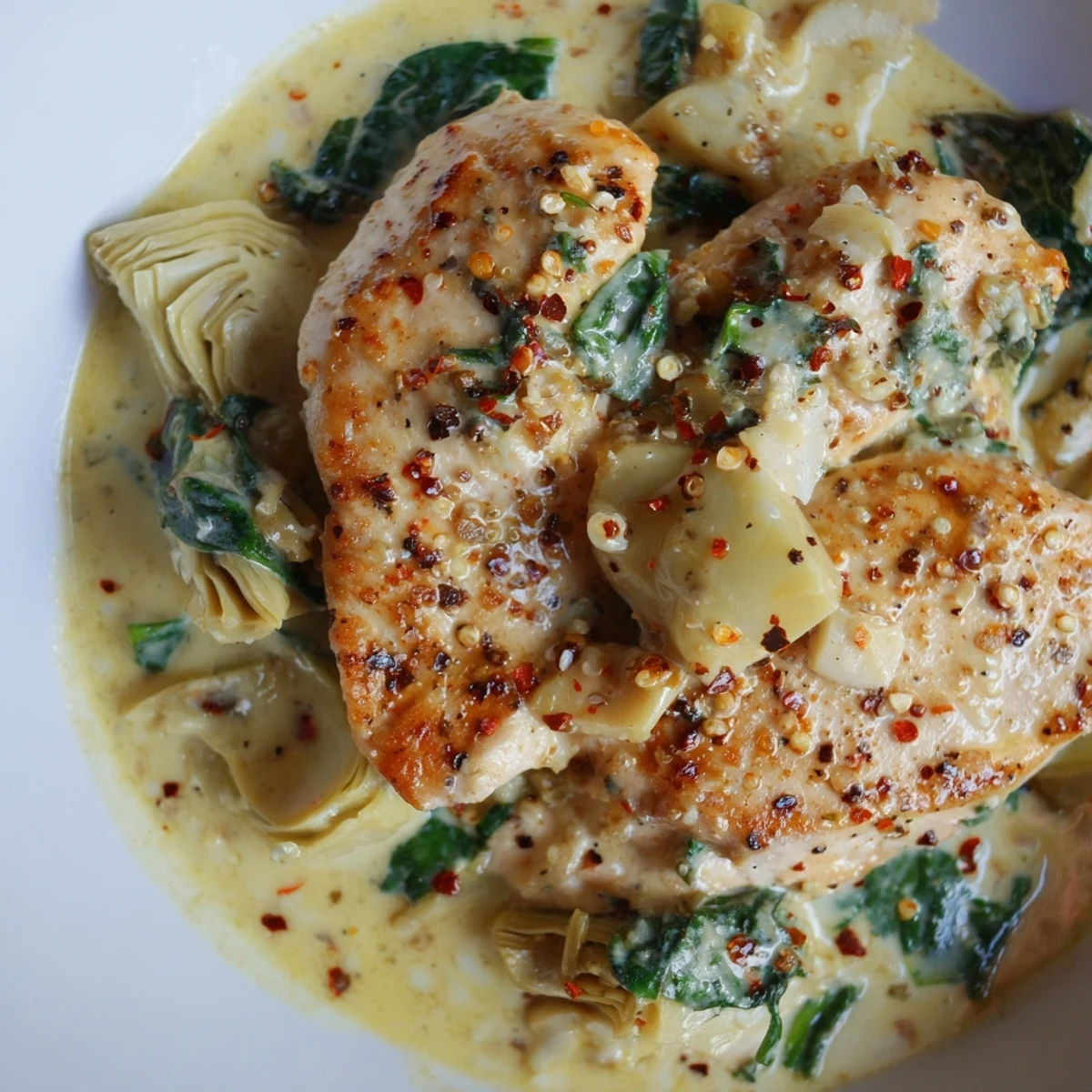
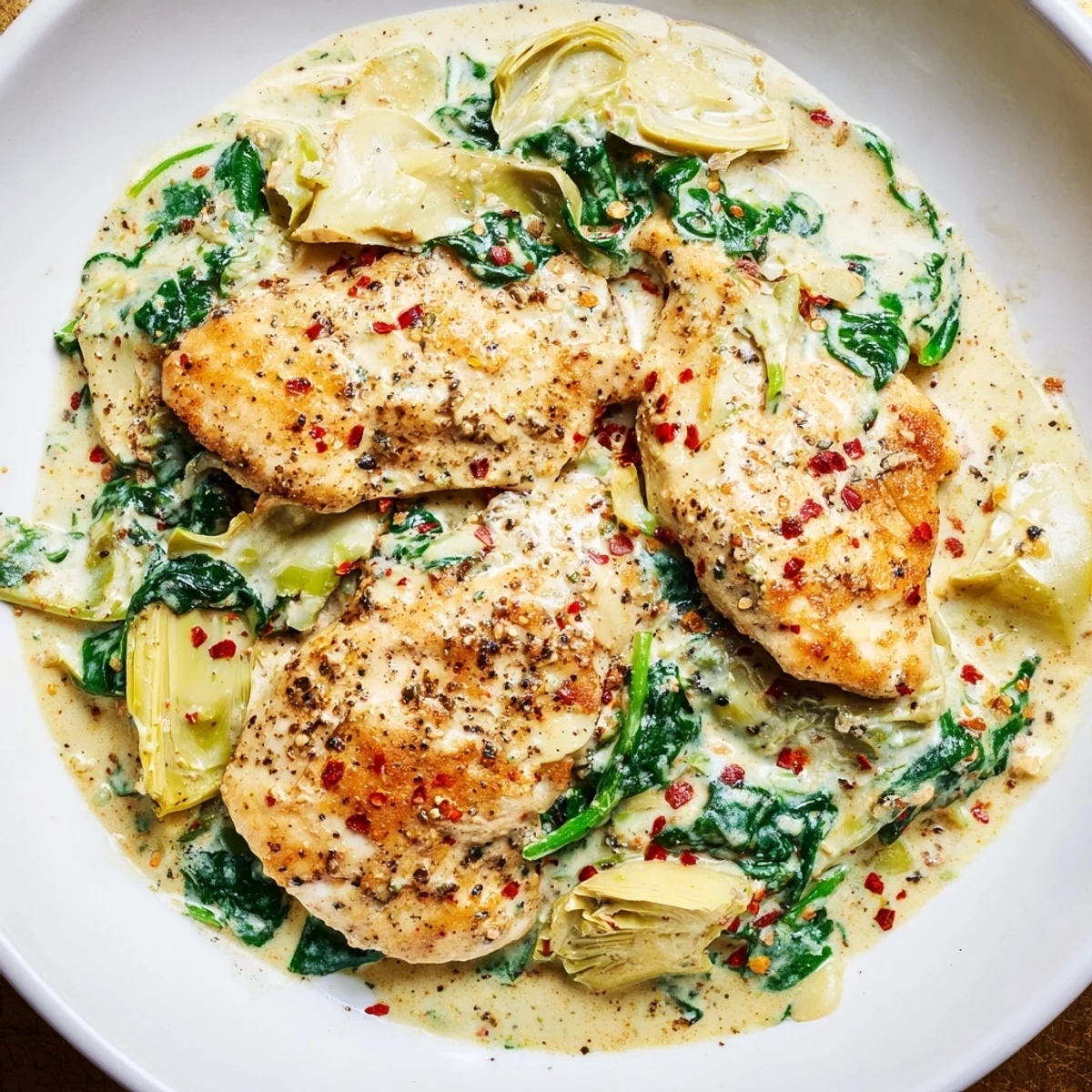
Save This dish features tender chicken breasts cooked to golden perfection and nestled in a luscious cream sauce enriched with fresh spinach and artichoke hearts. Garlic adds aromatic depth, while Parmesan cheese and Italian seasoning create a flavorful finish. Perfectly balanced and quick to prepare, this skillet meal combines wholesome ingredients for a comforting and satisfying dinner option ideal for busy weeknights.
There's something magical about the moment when a pan of simple ingredients transforms into something genuinely crave-worthy. I discovered this skillet dinner on a Wednesday night when I had chicken, cream, and a half-empty bag of spinach—nothing fancy, but somehow it all came together into something my family asked for the very next week. The garlic-forward sauce clings to the chicken like silk, and the artichoke hearts add this subtle earthiness that makes people ask what the secret ingredient is.
I made this for my sister right after she'd had a rough day at work, and watching her take that first bite and just close her eyes—that's when I knew this recipe was a keeper. She came back for seconds before I'd even finished plating, and now it's become her go-to comfort meal when life feels overwhelming. There's something about spinach and artichoke that feels both nourishing and indulgent at the same time.
Ingredients
- Chicken breasts: Boneless and skinless cook evenly and stay tender if you don't overcook them—aim for a gentle sear that seals the outside without drying out the inside.
- Garlic: Two cloves minced fine gives you that fragrant base that makes everything taste intentional and homemade.
- Fresh baby spinach: It wilts down dramatically, so four cups sounds like a lot until it hits the hot pan and becomes just enough green in every bite.
- Artichoke hearts: Canned and drained work perfectly here—quarter them so they're the right size to nestle alongside the chicken.
- Heavy cream and chicken broth: Together they create this balanced sauce that's rich but not overwhelming, with just enough body to coat everything beautifully.
- Parmesan cheese: Grated fresh makes a difference—it melts in smoothly and adds that savory depth that ties the whole dish together.
- Italian seasoning and red pepper flakes: The seasoning is gentle and familiar, while the red pepper flakes are optional but worth including if you like a whisper of heat.
Instructions
- Season and sear the chicken:
- Pat the chicken dry, then season generously with salt and pepper on both sides—this matters more than you'd think. Heat oil until it shimmers, then lay the chicken in the pan and resist the urge to move it; let it develop a golden crust for about four to five minutes before flipping.
- Build the aromatics:
- Once the chicken's out of the pan, add your minced garlic and let it bloom for just thirty seconds—you want it fragrant, not brown. The quick sauté wakes up the flavor.
- Wilt the greens:
- Toss in the spinach and watch it transform from a big pile to something manageable, then fold in the artichoke hearts. Stir gently so everything gets coated with the pan's warmth.
- Create the sauce:
- Pour in the cream and broth, then let it come to a gentle simmer—this is where the magic happens. Add the Parmesan, Italian seasoning, and red pepper flakes if you're using them, then stir until the cheese melts and the sauce thickens just slightly, about three minutes.
- Reunite and finish:
- Nestle the chicken back into the pan, letting it bathe in that creamy sauce for two to three minutes, spooning the sauce over it as it heats through. This last step is about bringing everything together and making sure every piece knows it's part of something delicious.
 Save
Save One night my neighbor smelled this cooking and showed up at my door asking what I was making—I invited her in for a plate, and we ended up talking for two hours over dinner. That's when I realized this dish has this quality that makes people want to linger at the table, to have another bite and another conversation.
Why This Becomes a Regular
This skillet meal has a way of becoming routine in the best sense—you start making it once and suddenly you're buying chicken and spinach every week without thinking about it. It's familiar enough to be comforting but interesting enough that it never feels boring, and it works equally well for a quiet weeknight with your family or when you're trying to impress someone without making a fuss.
Flexibility and Variations
The beauty of this dish is that it adapts to whatever you have on hand or whatever you're in the mood for—sun-dried tomatoes add brightness, a squeeze of lemon juice at the end wakes up the flavors, and roasted red peppers bring a subtle sweetness. Some nights I use half-and-half instead of heavy cream when I want something a touch lighter, and the sauce still turns out silky and satisfying.
What to Serve It With
I've served this over cauliflower rice when we're being strict about carbs, over regular pasta when we're not, and sometimes just in a bowl by itself when we want to focus on the sauce and the chicken. It pairs beautifully with crusty bread for soaking up every last bit of that cream sauce, or with a simple green salad on the side if you want something fresh to cut through the richness.
- Cauliflower rice keeps it low-carb and lets the creamy sauce be the star.
- Pasta transforms it into something more indulgent and hearty.
- A squeeze of fresh lemon juice before serving brightens everything up.
 Save
Save This is the kind of recipe that makes you feel capable in the kitchen while tasting like something special, and honestly, that's all you really need to keep coming back to a dish. Make it once, and it becomes yours.
Recipe FAQs
- → Can I use frozen spinach instead of fresh?
-
Frozen spinach can be used, but be sure to thaw and drain excess moisture to avoid a watery sauce.
- → What can I substitute for heavy cream?
-
Half-and-half is a lighter alternative that still provides a creamy texture without heaviness.
- → Is this dish suitable for low-carb diets?
-
Yes, the dish is naturally low in carbohydrates, especially when served without pasta or bread.
- → How do I know when the chicken is cooked through?
-
Chicken is done when it changes to opaque white and registers an internal temperature of 165°F (74°C).
- → Can I add other vegetables to the skillet?
-
Yes, sun-dried tomatoes, mushrooms, or zucchini work well and add variety to the dish.