
 Save
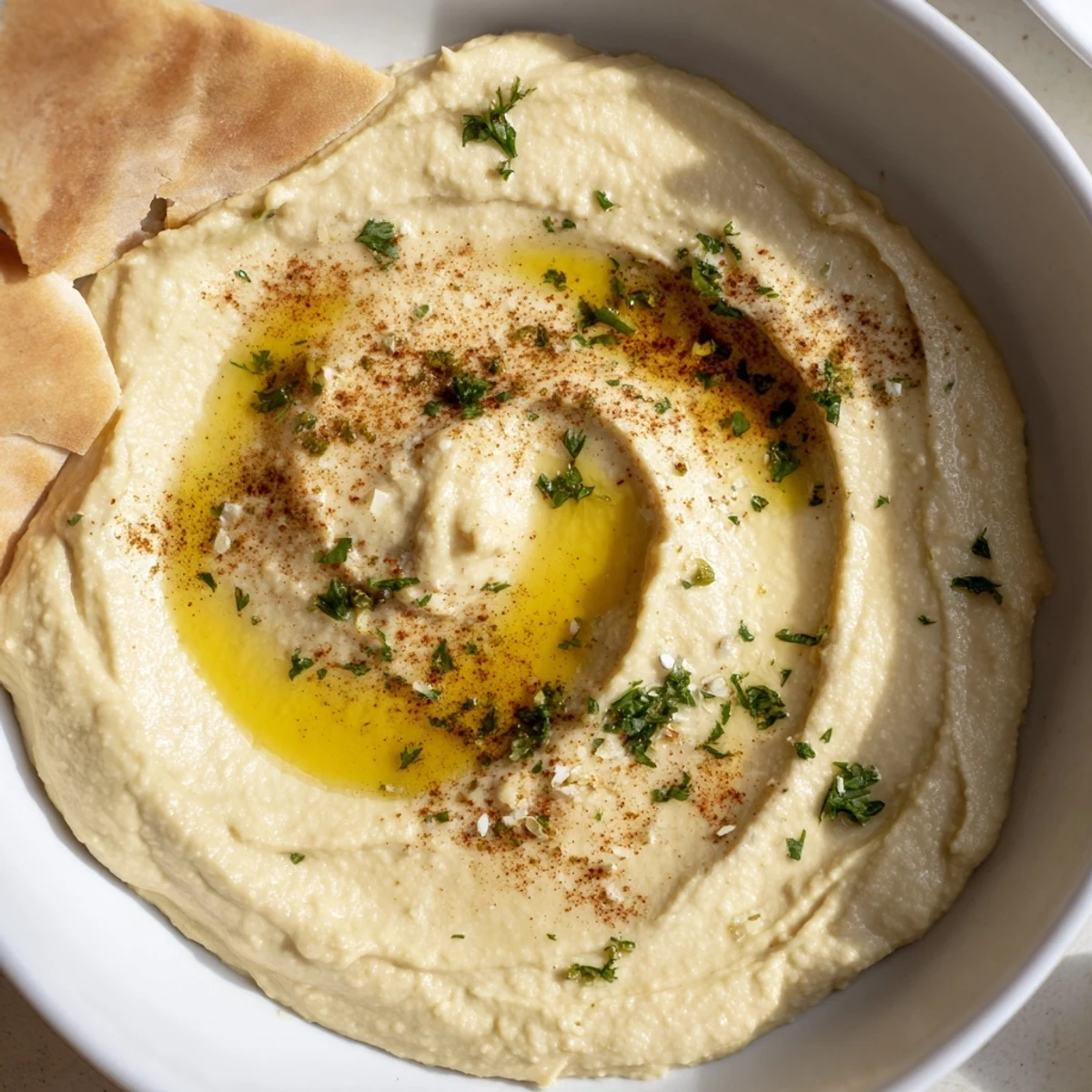
Save Silky hummus made by blending tahini and lemon until light, then adding garlic, cumin and drained chickpeas in stages until very smooth. Gradually stir in cold water to reach the desired viscosity, and last, drizzle olive oil while blending for a glossy, velvety texture. Serve at room temperature with smoked paprika or sumac and chopped parsley. Peel chickpeas for the silkiest finish; keep chilled up to 5 days.
My apartment smelled like a summer market in Tel Aviv the afternoon I finally cracked the secret to hummus that doesnt taste like grocery store paste. I had been blending batch after batch, each one slightly grainy, until a friend called mid process and distracted me long enough to over blend the tahini and lemon juice alone. That extra minute changed everything, whipping them into something pale and fluffy before a single chickpea entered the bowl.
I brought a bowl of this to a rooftop potluck last July and watched three strangers skip the charcuterie board entirely, scooping with flatbread until the bowl looked licked clean. One of them asked if I was Middle Eastern, which I am not, but I took it as the highest compliment of my cooking life.
Ingredients
- 1 can (400 g) cooked chickpeas, drained and rinsed: Rinse them thoroughly under cold water until the foam disappears because that foam carries a metallic canned taste.
- 4 tbsp (60 g) tahini: Stir the jar well before measuring since oil separation makes scoopable tahini misleadingly thick.
- 2 tbsp freshly squeezed lemon juice: Bottled juice will flatten the flavor so squeeze it fresh even if you are feeling lazy.
- 1 small garlic clove, minced: One small clove is enough since raw garlic can hijack the whole bowl if you go overboard.
- 3 tbsp cold water, plus more if needed: Cold water helps emulsify and loosens the paste into something spreadable.
- Half tsp ground cumin: A subtle warmth that most people cannot name but definitely miss when it is absent.
- Three quarters tsp salt, or to taste: Chickpeas soak up salt differently depending on the brand so taste as you go.
- 2 tbsp extra virgin olive oil, plus more for drizzling: Add it last with the motor running for a glossy, silky finish.
- Pinch of smoked paprika or ground sumac: Either one gives the bowl a finishing color that makes it feel restaurant worthy.
- Finely chopped fresh parsley: Optional but the green flecks against golden hummus look stunning.
Instructions
- Whip the tahini base:
- Drop the tahini and lemon juice into your food processor and let it run for a full minute until the mixture turns noticeably paler and creamier, scraping down the sides once halfway through.
- Season the paste:
- Add the minced garlic, cumin, and salt then blend again until everything is fully incorporated and fragrant.
- Blend in chickpeas:
- Add half the chickpeas and blend for a minute, scrape the bowl, then dump in the rest and keep going until you see a smooth, uniform paste with no visible chunks.
- Adjust the texture:
- Pour in cold water one tablespoon at a time, blending after each splash, and stop when the hummus flows off a spoon like thick frosting.
- Finish with olive oil:
- With the processor still running, drizzle in the olive oil in a thin stream and blend for another thirty seconds so it emulsifies into a silky, luxurious finish.
- Taste and season:
- Stop the machine, scoop a bit onto your finger, and add more salt or lemon juice if the flavor needs brightening.
- Plate and garnish:
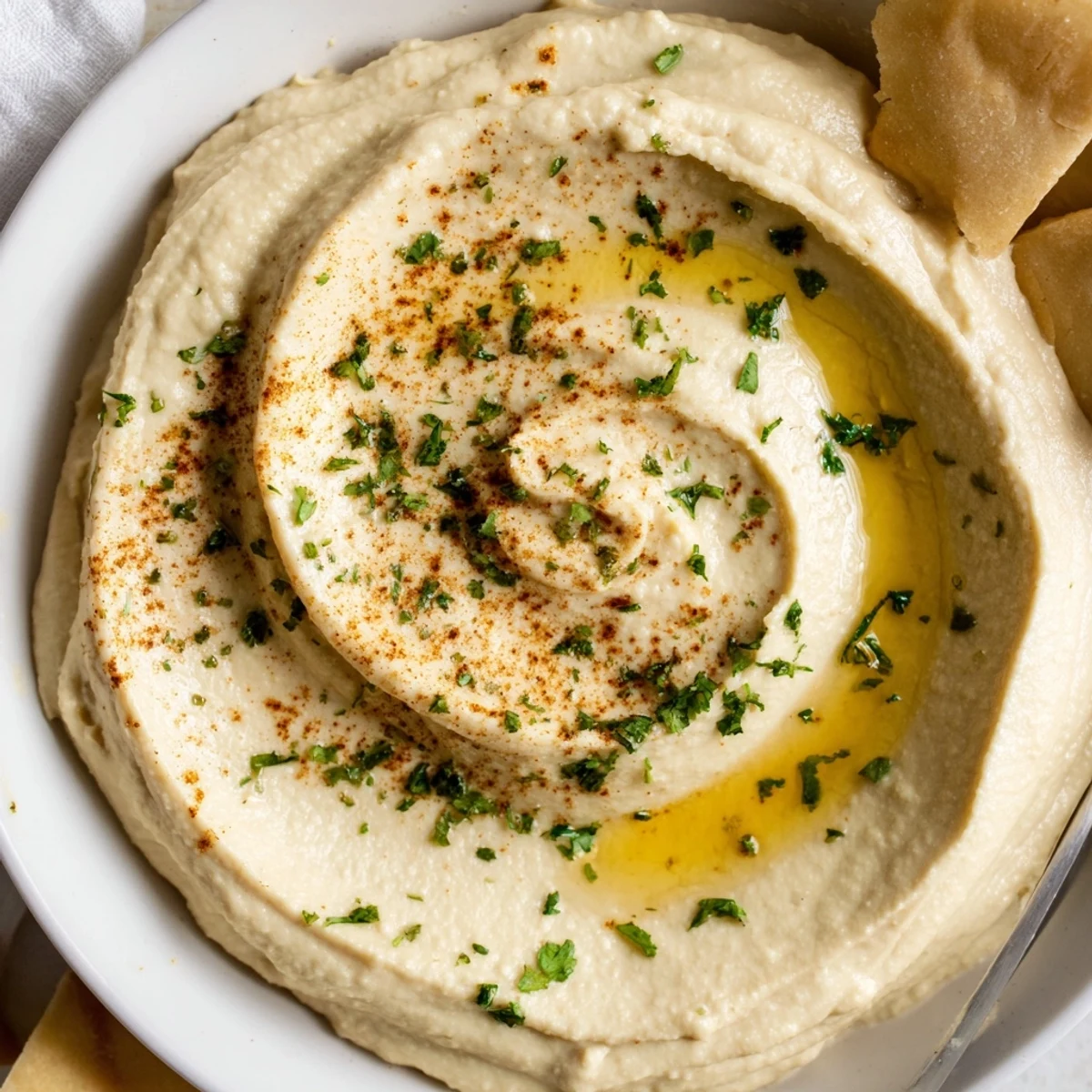
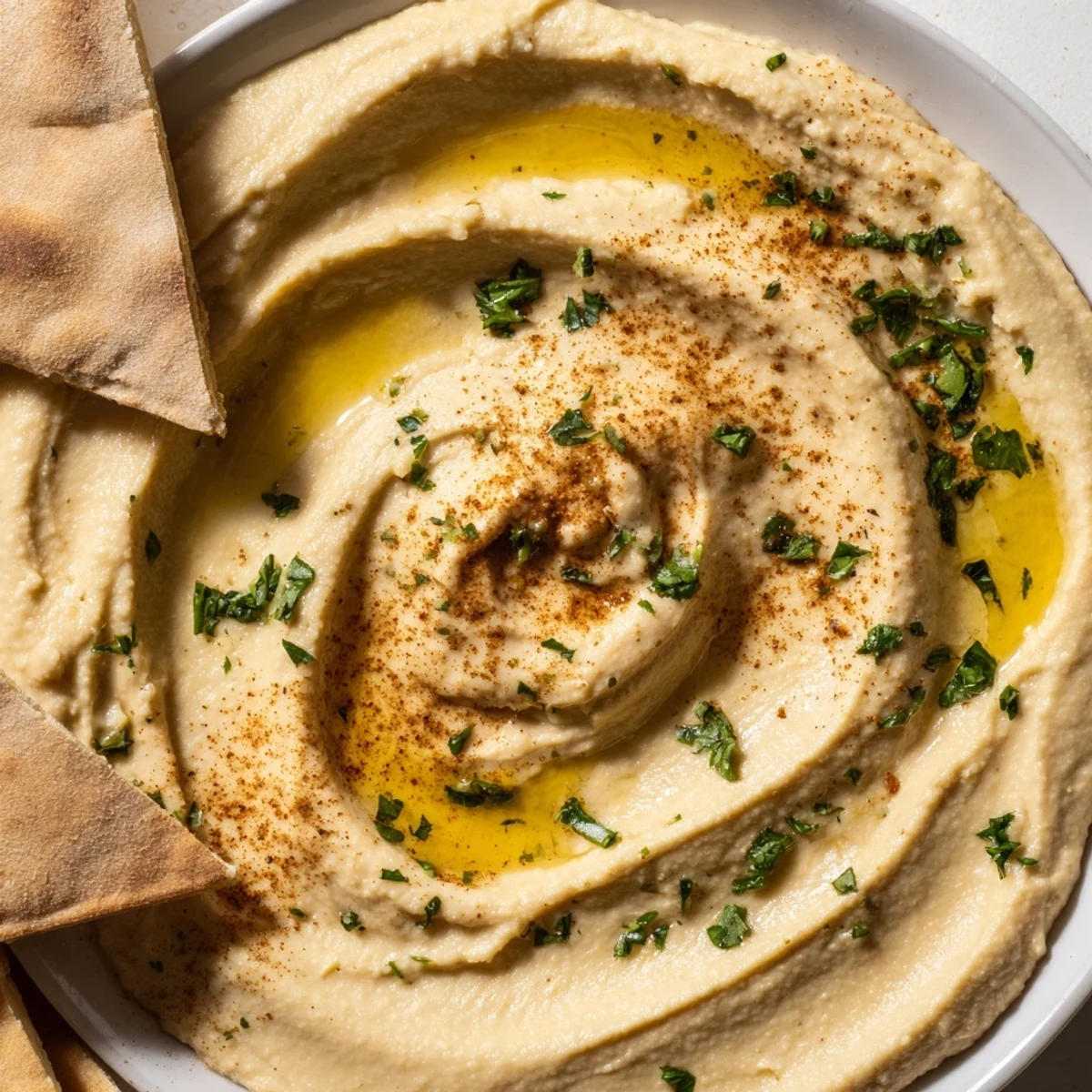
- Scoop the hummus into a shallow bowl, use the back of a spoon to create a wide swirl, drizzle generously with olive oil, and dust with paprika or sumac and a scatter of parsley.
 Save
Save There is something quietly powerful about a dish that needs no heat, no fancy equipment beyond a food processor, and no patience beyond ten minutes, yet manages to make people lean over the table and close their eyes when they taste it.
What I Learned After Dozens of Batches
The single biggest leap in my hummus came from processing the tahini and lemon juice alone before anything else touched the bowl. That brief whipping aerates the sesame paste and turns it from dense clay into something cloud light, and every chickpea you add after that benefits from the head start.
Variations Worth Trying
Once you nail the base technique the door opens wide: fold in a roasted red pepper for sweetness, double the garlic if you are feeling bold, or add a half teaspoon of zaatar to lean harder into the Middle Eastern flavors.
Storage and Serving
Hummus actually improves after a night in the fridge as the flavors marry and settle into something rounder and deeper than when it was first blended.
- Store it in an airtight container and press plastic wrap directly against the surface to prevent a skin from forming.
- Bring it to room temperature for at least fifteen minutes before serving for the best texture and flavor.
- It will keep beautifully for up to five days though in my house it rarely survives past day two.
 Save
Save Keep a bowl of this in your fridge and you will never scramble for a snack, a potluck contribution, or a quick lunch side again. It is the kind of recipe that quietly becomes part of your weekly rhythm without ever asking for effort.
Recipe FAQs
- → How do I get an ultra-smooth texture?
-
Blend tahini and lemon first until very creamy, then process chickpeas in batches. Add cold water tablespoon by tablespoon and drizzle in olive oil while blending to achieve a glossy, silky finish. Removing skins from chickpeas yields the smoothest result.
- → How should I adjust thickness?
-
Control consistency by adding cold water one tablespoon at a time while blending. For thicker spread, use less water; for dippable texture, add a little more and blend until incorporated.
- → Can I swap tahini with something else?
-
Tahini adds sesame richness and creaminess; for a milder alternative, try a neutral nut butter thinned with olive oil, but expect a different flavor profile. Reduce added salt if using salted substitutes.
- → What garnishes work best?
-
Finish with a drizzle of extra-virgin olive oil and a sprinkle of smoked paprika or sumac and chopped parsley for color and brightness. Toasted pine nuts or a few whole chickpeas can add texture.
- → How long will it keep?
-
Store in an airtight container in the refrigerator for up to 5 days. Allow to come to room temperature before serving for best texture and flavor; stir in a splash of water or oil if it firms up.
- → Any tips for flavor variations?
-
Add roasted red pepper, extra garlic, or a touch of cumin and smoked paprika to vary the profile. For a zestier twist, increase the lemon juice slightly and taste as you go.