
 Save
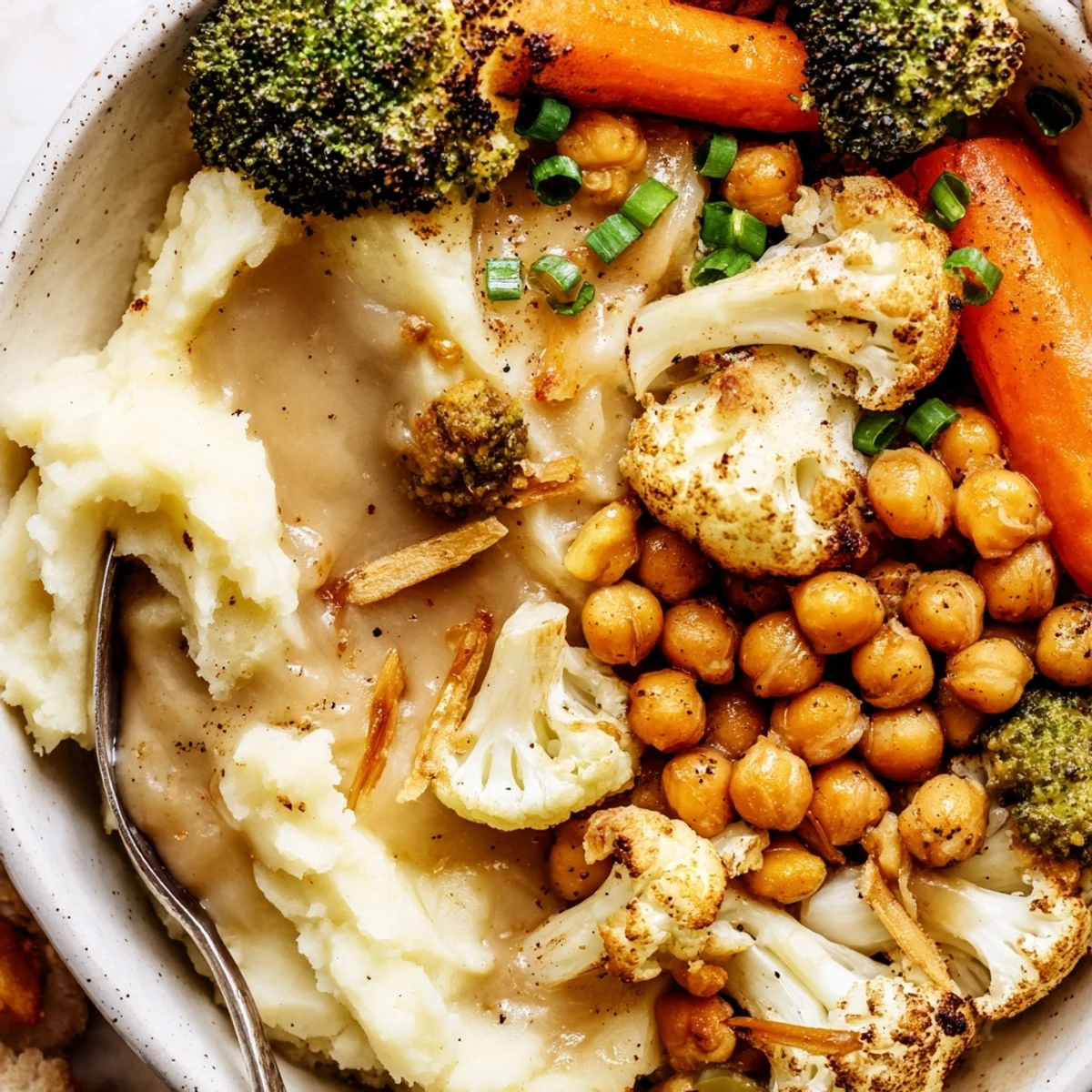
Save Start by roasting cauliflower, broccoli and carrots at high heat until caramelized while crisping seasoned chickpeas on a separate tray. Boil Yukon Gold or russets and mash with plant milk, vegan butter and garlic powder until silky. Whisk a roux into vegetable broth with soy sauce and nutritional yeast for a savory gravy. Assemble bowls with potatoes, vegetables, chickpeas and a generous gravy drizzle; top with fresh chives or crispy onions.
The rain was hammering against the kitchen window so hard I could barely hear the oven timer, and honestly that was fine because I was already three episodes deep into a comfort show and had no intention of leaving my blanket cocoon except to eat. That night demanded something thick, warm, and piled high enough to justify staying on the couch. I threw together whatever vegetables were slumping in the crisper drawer, mashed a mountain of potatoes with whatever creamy things I had, and built four bowls that felt like edible hugs. Those bowls became a cold weather ritual in my house after that one stormy evening.
I made a double batch of these bowls for a potluck where I was the only vegan, setting them out with zero fanfare near the other mains. Within twenty minutes someone was scraping the last bit of gravy off the serving spoon while two other people asked what was in the potatoes. Moments like that remind me why plant based cooking does not need to announce itself, it just needs to taste like you actually care.
Ingredients
- Yukon Gold or Russet potatoes (1.5 kg): Yukon Golds yield a naturally buttery texture, but Russets break down fluffier if you prefer lighter mash.
- Unsweetened plant milk (half cup): Oat milk gives the creamiest result without adding any strange sweetness to your potatoes.
- Vegan butter (3 tbsp): This adds the rich mouthfeel you would normally get from dairy butter, and brand quality really does matter here.
- Garlic powder (1 tsp): It distributes garlic flavor evenly through the mash without burning or leaving raw garlic chunks.
- Cauliflower and broccoli florets (2 cups each): Cut them into similar sized pieces so everything roasts at the same pace without some burning and some staying crunchy.
- Carrot (1 large): Sliced into rounds about a quarter inch thick, these roast into sweet tender coins that contrast the earthy greens beautifully.
- Olive oil, paprika, and thyme for roasting: This trio turns plain vegetables into something you will genuinely snack on straight from the pan.
- Chickpeas (1 can): Rinse them extremely well and pat them dry with a towel or they will steam instead of getting crispy in the oven.
- Smoked paprika and cumin for chickpeas: These two spices create a smoky warmth that makes roasted chickpeas genuinely addictive.
- Olive oil and flour (2 tbsp each) for gravy: This is your roux base, and cooking it until golden before adding liquid removes any raw flour taste.
- Vegetable broth (2 cups): Use a brand you actually enjoy sipping because the entire gravy flavor builds on this foundation.
- Soy sauce (1 tbsp) in gravy: Just a splash adds umami depth that makes the gravy taste like it simmered for an hour.
- Nutritional yeast and onion powder: These two work together to give the gravy a deeply savory, almost roasted flavor without any animal products.
- Chives, green onions, or crispy fried onions for topping: Something fresh or crunchy on top makes each bowl feel finished rather than just assembled.
Instructions
- Get the oven roaring:
- Preheat your oven to 220 degrees Celsius (425 Fahrenheit) and line a baking sheet with parchment paper so nothing sticks and cleanup stays painless.
- Roast those vegetables:
- Toss the cauliflower, broccoli, and carrot with olive oil, paprika, thyme, salt, and pepper until everything glistens, then spread it all in a single even layer on your prepared sheet and roast for 25 to 30 minutes, stirring once halfway through, until you see golden caramelized edges and the stems yield when poked.
- Crisp the chickpeas:
- On a separate small tray, tumble the drained and dried chickpeas with olive oil, smoked paprika, cumin, salt, and pepper, then slide them into the oven alongside the vegetables for 20 to 25 minutes, giving the pan a good shake every so often so they crisp evenly on all sides.
- Mash the potatoes:
- Drop your diced potatoes into a large pot, cover them with cold water and a generous pinch of salt, bring it to a rolling boil, then reduce the heat and let them simmer for 15 to 20 minutes until a fork slides through without resistance, drain them well, and mash them back in the pot with plant milk, vegan butter, garlic powder, salt, and pepper until silky and lump free.
- Build the gravy:
- In a small saucepan over medium heat, whisk the olive oil and flour together constantly for one to two minutes until the mixture turns a light golden color, then slowly pour in the vegetable broth while whisking aggressively to prevent lumps, stir in the soy sauce, nutritional yeast, onion powder, salt, and pepper, and let it bubble and thicken for about five minutes until it coats the back of a spoon.
- Assemble your bowls:
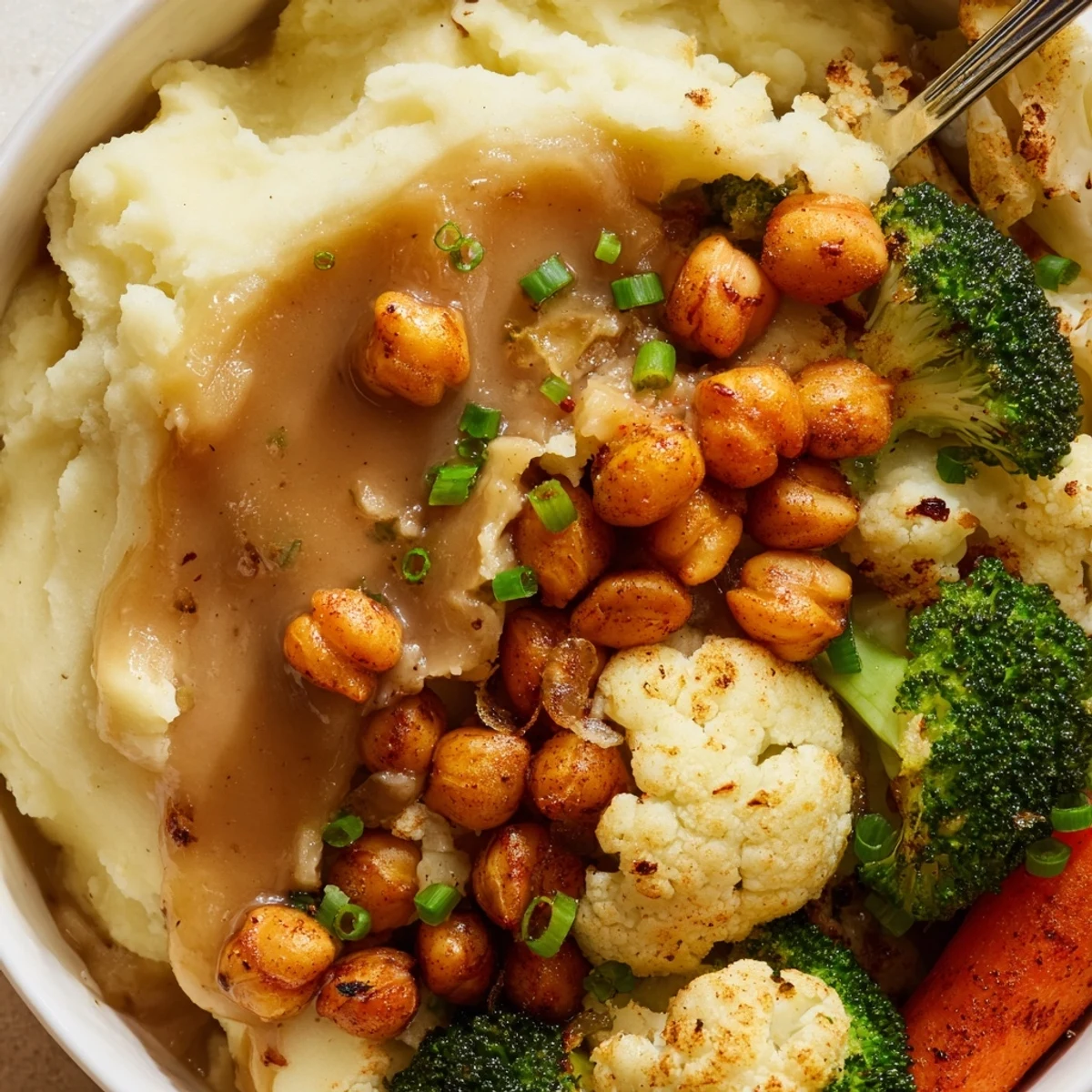
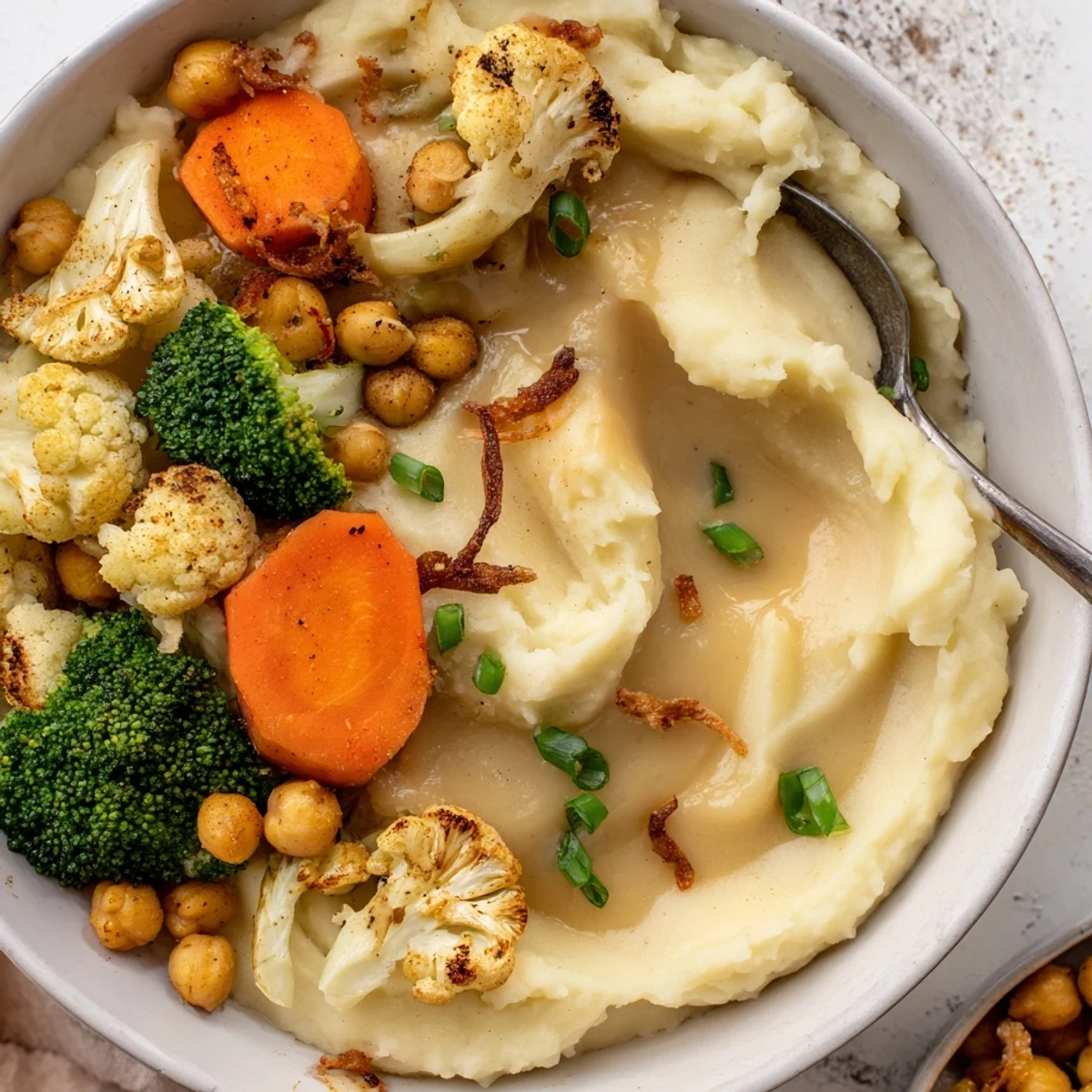
- Scoop a generous mound of mashed potatoes into each bowl, arrange the roasted vegetables and crispy chickpeas on top, ladle a healthy pour of gravy over everything, and finish with whatever toppings make your heart happy before serving immediately while steam is still rising.
 Save
Save One January evening my roommate walked in soaking wet from a failed bus commute and stood in the kitchen doorway dripping onto the tile while I handed her a bowl without saying a word. She ate the whole thing standing up, still in her rain jacket, and told me later it was the first time she had felt warm all day. Food does that sometimes, quietly fixing things you did not realize needed fixing.
Choosing the Right Potato
Yukon Golds have a lower starch content than Russets, which means they absorb liquids more gently and produce a denser, creamier mash that holds its shape beautifully in a bowl. Russets break down into something fluffier and lighter, which works better if you like your potatoes billowy rather than dense. I have tried mixing the two together and the result lands somewhere in the middle, which honestly might be the best of both worlds. Whatever you choose, cut the potatoes into uniform pieces so they all finish cooking at the same time.
Making the Gravy Ahead
This gravy reheats wonderfully if you make it a day in advance, though you will need to add a splash of vegetable broth or water and whisk it gently over low heat to bring back the smooth pourable consistency. It thickens considerably as it sits in the refrigerator because the flour continues to absorb liquid, but that is completely normal and nothing a little extra broth cannot solve. I usually make a double batch and keep the leftover gravy in a jar for pouring over toast, rice bowls, or roasted vegetables later in the week. It keeps for about four days refrigerated and freezes well for up to a month.
Swaps and Seasonal Tweaks
One of the best things about bowl meals is how forgiving they are when you need to use whatever is lurking in your kitchen. The template stays the same, a creamy base, roasted vegetables, something crunchy or protein rich, and a saucy finish, but the specific ingredients can rotate all year long without getting boring.
- Roasted sweet potato cubes or butternut squash work beautifully in place of white potatoes during autumn months.
- Brussels sprouts halved and roasted with the same seasoning blend become incredibly crispy and pair perfectly with the gravy.
- Stir two tablespoons of nutritional yeast directly into the mashed potatoes for a surprisingly cheesy flavor that changes the entire character of the bowl.
 Save
Save These bowls are proof that vegan comfort food does not need to be complicated or expensive to feel like a real meal worth sitting down for. Make them once and you will understand why they have a permanent spot in my winter rotation.
Recipe FAQs
- → Which potato variety yields the creamiest mash?
-
Yukon Golds are ideal for a naturally creamy texture and buttery flavor; russets also mash smoothly but may need a touch more plant milk to reach the same silkiness.
- → How do I keep the chickpeas crispy?
-
Dry chickpeas thoroughly before tossing with oil and spices, spread in a single layer on a tray, and bake at high heat, shaking the pan once or twice so they brown evenly and crisp up.
- → How can I thicken the gravy without lumps?
-
Cook the flour in oil briefly to form a roux before adding cold or room-temperature broth slowly while whisking constantly; simmer until it reaches the desired thickness.
- → Can I make components ahead of time?
-
Yes—roasted vegetables and chickpeas keep well refrigerated for 2–3 days. Reheat in a hot oven to restore crispness and gently warm mashed potatoes and gravy on the stovetop, adding a splash of plant milk if needed.
- → What easy swaps make this gluten-free?
-
Use a gluten-free all-purpose flour or cornstarch slurry for the gravy, and substitute tamari for soy sauce to remove gluten from seasoning components.
- → How can I vary the vegetables for seasonality?
-
Swap in sweet potatoes, brussels sprouts, roasted squash or bell peppers depending on the season; toss with the same oil and spices and adjust roasting time to tenderness.